Weld Porosity: What Causes It and How to Fix It
Weld porosity is gas trapped in the weld, usually from lost shielding gas or dirty metal; use the symptom table to find the cause and the fix.
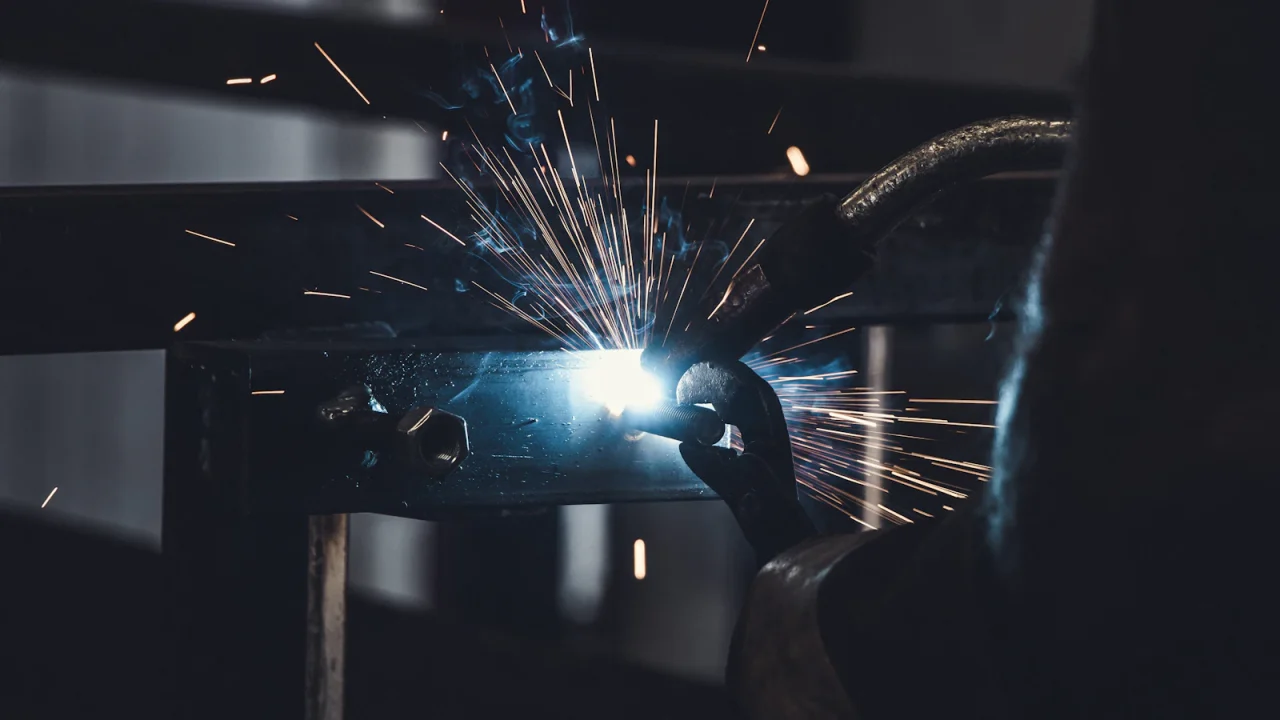
Porosity is gas trapped in the weld metal as it solidifies. It shows up as pinholes, pits or sponge-like clusters on the surface, or as hidden voids you only find when you grind into the bead. Nearly every case traces back to one of two things: the puddle lost its shielding, or something on the metal, wire or rod turned into gas in the arc.
On this page
Start with the quick checks. Confirm gas is actually flowing at the nozzle, block any draft, clean the joint to bright metal and shorten your stickout. Those four steps cover the most common causes before you touch a machine setting.
Symptom, likely cause and fix
| Symptom | Likely cause | Fix |
|---|---|---|
| Pinholes along the whole bead (MIG or TIG) | Little or no gas reaching the puddle: empty cylinder, closed valve, flow set too low or a leak | Open the valve, check the contents gauge, set flow to the range in your manual and test fittings for leaks |
| Porosity only outdoors or near a fan or open door | A draft is blowing the shielding gas away | Put up screens, redirect the fan, or switch to stick or self-shielded flux-core |
| Porosity and a nozzle packed with spatter | Blocked nozzle or diffuser is restricting or disturbing gas flow | Clean the nozzle and diffuser ports; replace damaged parts |
| Porosity even with the flow turned up high | Excess flow is turbulent and drags air into the shield | Bring flow back down into the recommended range |
| Porosity when the gun is held far from the work | Stickout too long, so gas coverage thins out | Hold about 3/8 inch stickout for short-circuit MIG and keep the gun angle modest |
| Porosity on rusty, scaled, painted or oily steel | Contaminants are vaporizing in the arc | Grind or sand to bright metal, degrease and let it dry |
| Holes with white residue on galvanized steel | Zinc coating is boiling off into the weld | Remove the coating from the weld zone first, with fume controls in place |
| Stick welds with holes, often at the start | Damp rods or an arc held too long | Use dry rods stored as the maker directs and hold a short arc |
| Flux-core pinholes or worm tracks | Damp wire, too much voltage, wrong polarity or wrong stickout | Store wire dry, lower voltage in small steps and check polarity and stickout on the wire data sheet |
| A single pinhole in the end crater | Arc broken off before the crater filled, or gun pulled away at once | Pause to fill the crater and hold the gun in place until the gas stops |
Shielding gas problems
With MIG and TIG, lost gas coverage is the first suspect. Work from the cylinder to the nozzle:
- Cylinder and valve. Check that the valve is open and the contents gauge shows pressure.
- Flow rate. Read the flowmeter while gas is flowing. Roughly 15 to 20 CFH is a common starting range for TIG, and short-circuit MIG commonly runs somewhat higher, in the 20 to 30 CFH range. Confirm the figure in your machine manual.
- Leaks. Brush soapy water on the regulator and hose fittings and look for bubbles. Inspect the hose for cracks and the gun connection for worn O-rings.
- Nozzle and diffuser. Spatter buildup blocks and deflects the gas stream. Clean it out often.
- Drafts. A light breeze, a fan or an open garage door is enough to strip the shield away.
Too much flow is as bad as too little. A blast of gas turns turbulent and pulls air into the puddle, so resist the urge to keep turning it up. The MIG gas guide covers the choices, and MIG welding basics covers nozzle and stickout setup.
Contamination on the metal, wire or rod
Anything that burns or boils in the arc releases gas into the puddle. Rust, mill scale, oil, cutting fluid, paint, galvanizing and plain moisture are the usual sources. Cold steel brought into a warm shop can carry a film of condensation you cannot see.
Clean the joint to bright metal with a flap disc or wire wheel, about an inch back on each side, then degrease and let it dry completely. Never weld near chlorinated solvents such as some brake cleaners, because heat and arc light can break them down into toxic gases.
Galvanized steel needs extra care. The zinc coating causes porosity, and its fume causes metal fume fever, a flu-like illness. Remove the coating from the weld area before welding and control the fume while you do it. The welding safety basics guide explains ventilation.
Filler matters too. Rusty MIG wire, filler rod with oil on it, and damp electrodes or flux-core wire all carry contamination straight into the weld. Keep spools covered, and store rods and cored wire somewhere dry.
Process-specific causes
Stick
Low-hydrogen rods such as E7018 pick up moisture from the air, and damp coatings cause porosity. So does a long arc, which lets air into the shield. Hold a short arc and store rods as the manufacturer directs. More on rods in stick welding basics.
Flux-core
Self-shielded wire has no gas to lose, so look at polarity, stickout and voltage. Most self-shielded wires run DCEN. Excess voltage produces worm tracks, which are elongated marks on the bead surface. Reduce voltage in small steps and compare your stickout with the wire data sheet. See flux-core welding basics.
TIG
Gray, sooty or porous TIG welds point to contaminated tungsten or filler, the wrong gas, too little flow or a draft. Regrind the tungsten, clean the rod and confirm you are on 100% argon. TIG welding basics covers setup.
Technique causes
Travel too fast and the puddle freezes before gas can escape, or the arc outruns its shielding. A steep gun angle pulls air in behind the nozzle. Slow down slightly, keep the gun within about 15 degrees of perpendicular, and hold a consistent distance to the work. If several faults show up together, the list of common beginner welding mistakes is a useful cross-check.
Repairing a porous weld
Do not weld over porosity. A cover pass hides the surface holes and leaves the voids underneath. Grind the affected section out to sound metal, correct the cause, test on scrap, then reweld. If the weld is structural, holds pressure or is otherwise safety-critical, the repair belongs with a qualified welder working to a qualified procedure, with inspection.
Frequently asked questions
Is a small amount of porosity acceptable?
Why do I only get porosity at the start of a weld?
Can too much shielding gas cause porosity?
Why is my MIG weld porous and covered in spatter?
Sources and further reading
Keep reading
Related guides
Troubleshooting
MIG Welder Spatter: Causes and Fixes
MIG spatter usually comes from mismatched voltage and wire speed, long stickout, wrong polarity or dirty metal; here is how to fix…
Material guide
How to Weld Aluminum: Processes, Prep and Common Problems
Aluminum needs AC TIG or MIG with a spool gun, pure argon and careful cleaning. This guide covers prep, filler choice, technique…
Buying advice
What Welder Should a Beginner Buy?
A beginner should usually buy a wire-feed welder: 120V flux-core for a low-cost start, or a gas-capable MIG machine for cleaner welds…