MIG Welder Spatter: Causes and Fixes
MIG spatter usually comes from mismatched voltage and wire speed, long stickout, wrong polarity or dirty metal; here is how to fix each cause.
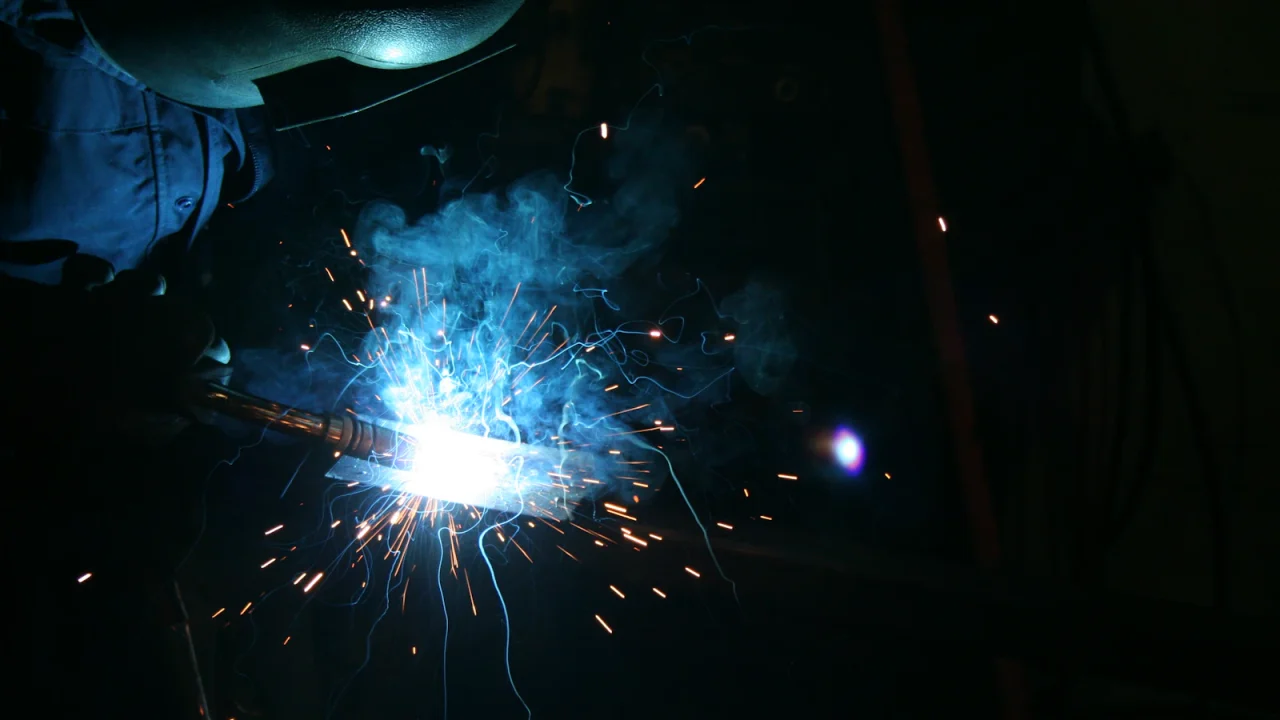
Some spatter is normal in short-circuit MIG, where the wire touches the puddle and breaks away many times a second. Heavy spatter is different. If beads of metal are stuck across the plate and the nozzle clogs every few inches, something in the setup is off, and the most common culprit is voltage that does not match the wire feed speed.
On this page
Work through the causes in order: settings, stickout, polarity, surface condition, gas, consumables and the work clamp, then technique. Change one thing at a time and run a test bead on scrap of the same thickness after each change.
Cause and fix at a glance
| Cause | What you notice | Fix |
|---|---|---|
| Voltage too low for the wire speed | Wire stubs into the plate, loud popping, tall ropey bead | Raise voltage one step or reduce wire speed slightly |
| Voltage too high for the wire speed | Long, hissing arc with large droplets and a wide, flat bead | Lower voltage one step or increase wire speed slightly |
| Stickout too long | Soft, erratic arc that worsens as the gun drifts away | Hold roughly 3/8 inch from contact tip to work |
| Wrong polarity | Heavy spatter and poor penetration from the first bead | DCEP for solid wire with gas; check the wire label for flux-core |
| Dirty or coated metal | Crackling, popping and often porosity | Grind to bright metal and degrease |
| 100% CO2 shielding gas | Harsher arc with coarser spatter than a mixed gas | Use an argon and CO2 mix such as 75/25, or accept more cleanup |
| Poor gas coverage | Spatter together with pinholes or soot | Check flow, leaks, drafts and a blocked nozzle |
| Worn or wrong-size contact tip | Arc wanders and stutters | Fit a new tip that matches the wire diameter |
| Bad work clamp connection | Arc cuts in and out; clamp or cable gets hot | Clamp to clean bare metal near the weld and tighten cable connections |
| Steep gun angle | Spatter thrown ahead of or behind the puddle | Keep the travel angle to about 10 to 15 degrees |
Balance voltage and wire speed
Wire feed speed sets amperage, and voltage sets arc length. When the two are balanced, the arc makes a steady, even crackle and the bead wets in at the edges. When voltage is too low for the wire speed, the wire drives into the puddle faster than it can melt, stubs, and blasts metal out sideways. When voltage is too high, the arc grows long, large droplets form on the wire end, and they scatter on the way across.
Start from the chart inside your machine’s door for your wire diameter, gas and material thickness. Then adjust one control at a time in small steps. Treat any setting, including the chart, as a starting point, and confirm it against the wire maker’s printed range and your manual. The MIG welding basics guide walks through the setup.
Stickout, gun angle and travel
Stickout is the length of wire between the contact tip and the work. Roughly 3/8 inch is typical for short-circuit MIG. As it gets longer, the wire heats up before it reaches the arc, the current drops and the arc turns unstable. Gas coverage also thins out, which adds porosity to the spatter.
Brace your hand so the distance stays constant along the joint. Keep the gun tilted about 10 to 15 degrees in the direction you are pushing or pulling. Lay it over much further and the arc throws metal along the plate instead of into the joint.
Polarity, gas and wire
Polarity. Solid wire with shielding gas runs on DC electrode positive (DCEP). Most self-shielded flux-core wire runs on DC electrode negative (DCEN). If you switched wire types and spatter jumped, check the lead connections inside the machine against the diagram and the wire label. Flux-core also spatters more than solid wire even when set correctly, as flux-core welding basics and the MIG vs flux-core comparison explain.
Gas. Straight CO2 gives a harsher arc and coarser spatter than an argon and CO2 mix such as 75/25. Low flow, leaks and drafts cause spatter too. The MIG gas guide covers the options.
Wire. Rusty or dirty wire feeds erratically and contaminates the arc. Cut back to clean wire or replace the spool, and keep it covered between sessions.
Metal prep and electrical connections
Mill scale, rust, paint and oil all disturb the arc. Grind the joint to bright metal before welding. Remove galvanizing from the weld area as well, with fume controls in place, since zinc causes both spatter and hazardous fume.
The welding circuit runs through the work clamp, so a weak connection there acts like a wrong setting. Clamp onto clean bare steel close to the weld, and check that the cable lugs at the machine and clamp are tight. At the other end of the circuit, a contact tip worn oval passes current unevenly. Tips are consumables, so replace one as soon as the arc starts to wander.
Low input voltage has the same effect as a low voltage setting. A long or undersized extension cord can starve a 120V machine. Use only the cord size and length the manual allows, and see the 120V vs 240V comparison if the machine struggles on your circuit. Have a qualified electrician handle any circuit or outlet work.
Dealing with the spatter that remains
Anti-spatter spray or gel on the nozzle and on the surfaces beside the joint stops spatter from bonding, so it wipes or chips off. Keep it out of the joint itself. Clean the nozzle regularly, because a clogged nozzle disrupts gas flow and makes the problem worse.
Remove what sticks with a chisel, chipping hammer or flap disc, and wear eye and face protection for chipping and grinding. Spatter is also an ignition source. AWS notes that sparks and spatter can travel up to 35 feet, so clear or shield combustibles around the work area as described in the home welding area setup guide, and cover your skin using the PPE checklist.
Frequently asked questions
Is some spatter normal with MIG welding?
Will anti-spatter spray fix the problem?
Why did spatter suddenly get worse when I changed nothing?
Does CO2 cause more spatter than mixed gas?
Sources and further reading
Keep reading
Related guides
Troubleshooting
Weld Porosity: What Causes It and How to Fix It
Weld porosity is gas trapped in the weld, usually from lost shielding gas or dirty metal; use the symptom table to find…
Material guide
How to Weld Aluminum: Processes, Prep and Common Problems
Aluminum needs AC TIG or MIG with a spool gun, pure argon and careful cleaning. This guide covers prep, filler choice, technique…
Buying advice
What Welder Should a Beginner Buy?
A beginner should usually buy a wire-feed welder: 120V flux-core for a low-cost start, or a gas-capable MIG machine for cleaner welds…