Buying guide
240V Welder Buying Guide: More Power for Thicker Steel
How to choose a 240V welder: amperage for thicker steel, duty cycle, the circuit an electrician must install and the machine types to compare.
WelderGuru is reader-supported. As an Amazon Associate we earn from qualifying purchases made through links on this page, at no extra cost to you. Learn more.
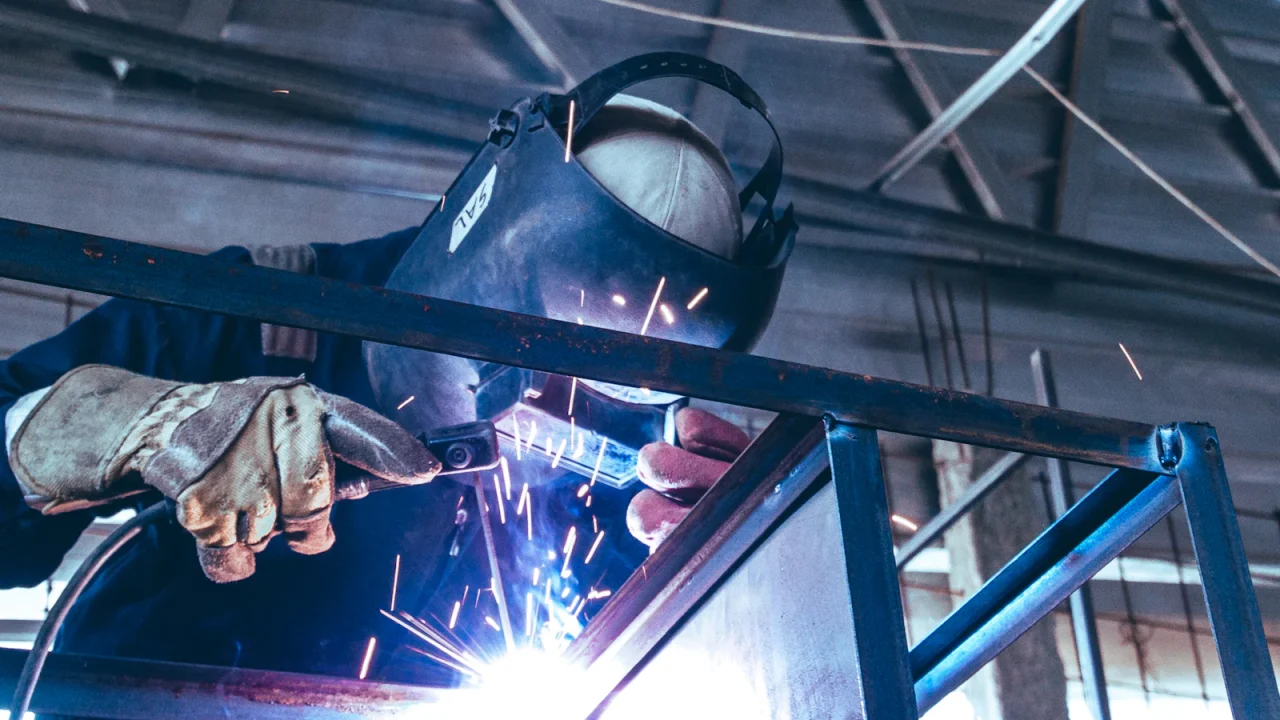
A 240V welder suits you if you regularly weld steel 1/4 inch and thicker, or want to run longer welds without waiting on a thermal cutout. That covers heavier fabrication such as welding tables, equipment racks and thick brackets. It assumes you have a suitable 240V circuit, or will pay an electrician to install one.
On this page
Settle the circuit first. What your electrical panel can support decides which amperage class you can run, so confirm that with a qualified electrician before you choose a machine.
Who this suits (and who should look elsewhere)
Buy 240V if thick material is routine and not occasional, if you run long beads on projects such as a welding table, or if you want aluminum capability through a spool gun or AC TIG.
Stay with 120V welders if your work is sheet metal and light tube, if you rent and cannot add a circuit, or if you need to plug in wherever you happen to be. Greater capacity does not change what is safe to attempt: structural work, vehicle frames, pressure vessels and fuel tanks need qualified procedures and inspection whatever the machine.
240V welder types compared
| Type | Best for | Process | Power | Key feature | Check price |
|---|---|---|---|---|---|
| 240V MIG welder, 180 to 250 A | Garage fabrication in steel up to roughly 1/2 inch | MIG and flux-core | 240V | High output and duty cycle | See on Amazon (opens Amazon in a new tab) |
| Dual-voltage MIG welder | Thick work at home, light jobs elsewhere | MIG and flux-core | 120V/240V | Full output on 240V, reduced on 120V | See on Amazon (opens Amazon in a new tab) |
| 240V multi-process welder | Mixed MIG, stick and DC TIG work | MIG, flux-core, stick, DC TIG | 240V or dual voltage | Several processes from one power source | See on Amazon (opens Amazon in a new tab) |
| 240V stick welder | Thick or rusty steel and outdoor repairs | Stick | 240V or dual voltage | No gas or wire feeder | See on Amazon (opens Amazon in a new tab) |
| AC/DC TIG welder | Aluminum and precise work | AC/DC TIG, usually stick too | 240V or dual voltage | AC output for aluminum | See on Amazon (opens Amazon in a new tab) |
The specifications that matter on 240V
Amperage and material thickness
For MIG on steel, the rough rule of 1 amp per .001 inch of thickness holds best on thinner material. Thicker joints are usually beveled and filled in more than one pass, which is how machines of 180 to 250 A handle roughly 5/16 to 1/2 inch. Size the machine to the thickest steel you weld regularly, with some margin, and go by the manufacturer’s capacity chart.
Check the minimum too. A machine that turns down far enough still welds sheet metal.
Duty cycle
Duty cycle is the percentage of a 10-minute period a machine can weld at a stated amperage: 30% at 90 A means 3 minutes of welding and 7 minutes of cooling. 240V machines generally hold higher ratings at working amperages than 120V machines. Compare candidates at the same amperage. The duty cycle calculator does the arithmetic.
Input voltage and circuit
The nameplate lists the rated input current. That figure, not the welding output, is what the circuit must supply. 240V machines commonly use 30 to 50 A circuits, per the nameplate. Give your electrician the manual and let them size the circuit and fit a receptacle that matches the machine’s plug. The power compatibility checker helps you prepare the questions.
Weight, accessories and consumables
240V inverter machines can be light enough to carry, while transformer machines are heavy and belong on a welding cart. Check cable lengths, whether a regulator is included, and which wire spool sizes fit. Confirm that tips, nozzles and liners are easy to source. Every figure here is typical for the type, so verify it on the product listing and in the manual.
Three types worth shortlisting
Best fit for steel fabrication
240V MIG welder, 200 A class
Why consider it
- Output in the 180 to 250 A range handles roughly 5/16 to 1/2-inch steel
- Higher duty cycle at working amperages than 120V wire-feed machines
- Many models accept a spool gun for aluminum, usually sold separately
Best for: Home fabricators who regularly weld 1/4-inch and thicker mild steel
Check price on Amazon (opens Amazon in a new tab)
Type-level recommendation. Compare current models, specifications and prices on Amazon. We may earn a commission.
Most flexible
Dual-voltage multi-process welder
Why consider it
- Runs MIG, flux-core, stick and usually DC lift TIG
- Delivers full output on 240V and reduced output on 120V
- The TIG side is typically DC-only, so it does not weld aluminum
Best for: Shops that want MIG, stick and DC TIG on 240V with 120V as a fallback
Check price on Amazon (opens Amazon in a new tab)
Type-level recommendation. Compare current models, specifications and prices on Amazon. We may earn a commission.
Lowest cost for thick steel
240V stick welder
Why consider it
- No shielding gas or wire feeder, so little to set up or maintain
- Tolerates wind and less-than-clean steel better than MIG
- Inverter versions are light, and transformer versions are heavier but simple
Best for: Outdoor repairs on thick or less-than-clean steel where finish matters less
Check price on Amazon (opens Amazon in a new tab)
Type-level recommendation. Compare current models, specifications and prices on Amazon. We may earn a commission.
Other kit and running costs to budget for
The electrical work is often the largest extra, so get an electrician’s quote before you order the machine. After that, budget for a larger gas cylinder if you MIG weld, wire or electrodes, and a cart. Higher amperage also asks more of your protective gear: heavier gloves, a proper jacket and the right lens shade, which the welding helmet shade guide explains.
Common buying mistakes
- Ordering the machine before checking the panel. If the panel cannot support the circuit, the plan changes.
- Counting on an outlet installed for another appliance. Have an electrician confirm any existing circuit and receptacle against the welder’s nameplate.
- Buying far more amperage than the work needs. Bigger machines cost more and need larger circuits.
- Comparing duty cycles quoted at different amperages. The numbers only compare at the same output.
Frequently asked questions
Do I need a 240V welder for 1/4-inch steel?
What circuit does a 240V welder need?
Is a dual-voltage welder better than a 240V-only machine?
Can I run a 240V welder from a generator?
Sources and further reading
Related gear on Amazon
Shortcuts to current Amazon listings for the items mentioned in this guide. These are affiliate links.
Tools that help with this decision
- Welder Match Quiz — Ten quick questions that match you to a type of welder.
- Amperage Calculator — Estimate the amperage range for your material and process.
- Power Compatibility Checker — Verify voltage, breaker, and outlet before buying.
- Setup Generator — Build a safety-first setup checklist.