Buying guide
Welding Glove Buying Guide: Matching Gloves to the Process
How to choose welding gloves for stick, MIG and TIG: leather types, lining, cuff length, Kevlar stitching, sizing and when to replace a pair.
WelderGuru is reader-supported. As an Amazon Associate we earn from qualifying purchases made through links on this page, at no extra cost to you. Learn more.
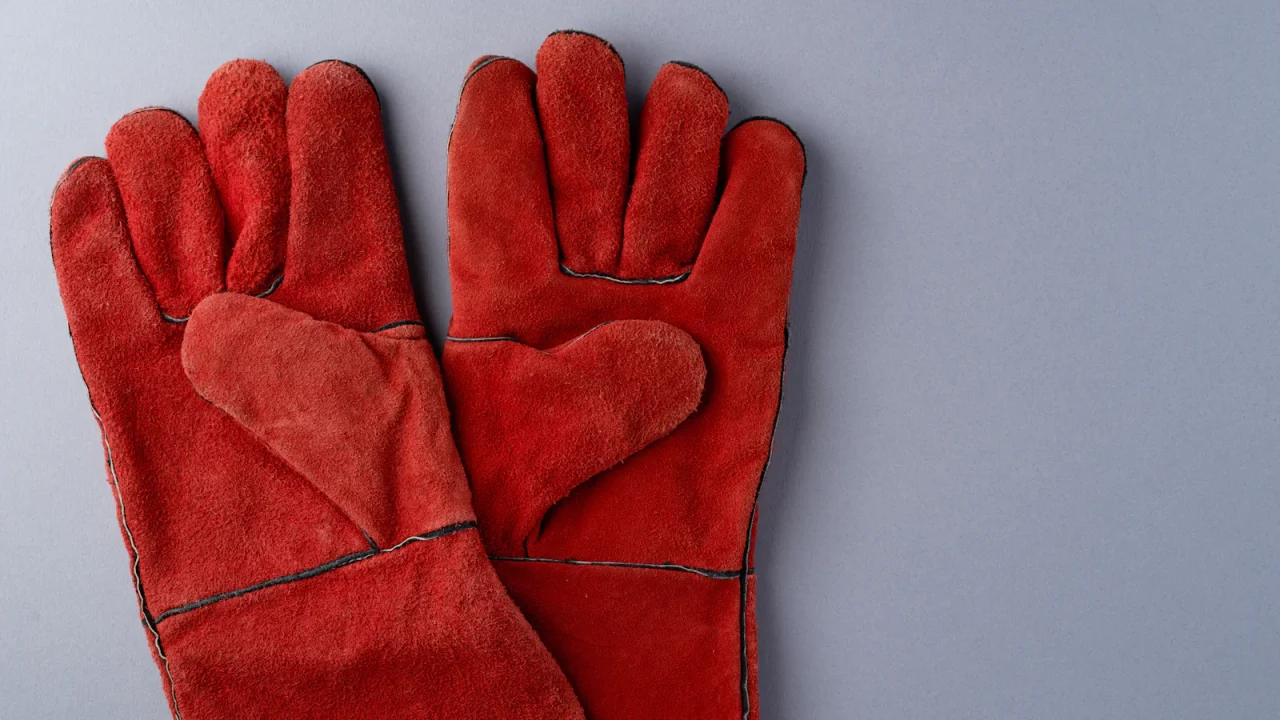
Match the glove to the process. Stick and heavy MIG throw heat and spatter, so they call for thick, lined gauntlets. TIG depends on fingertip control to feed filler rod, so it calls for thin, close-fitting leather. A glove built for one job does the other badly, so plan on two pairs if you run both.
On this page
Whatever you choose has to be dry and free of holes. AWS lists both as basic requirements, because wet or damaged leather stops insulating you from heat and from the welding circuit.
Welding glove types compared
| Type | Best for | Key feature | Trade-off | Check price |
|---|---|---|---|---|
| Heavy stick gauntlet | Stick, flux-core and high-amperage MIG | Thick split cowhide, full lining and a long cuff | Stiff, with little fingertip feel | See on Amazon (opens Amazon in a new tab) |
| MIG glove | MIG on light to medium work | Top-grain palm with a lined or padded back | Less heat protection than a heavy gauntlet | See on Amazon (opens Amazon in a new tab) |
| TIG glove | TIG and other fine, low-spatter work | Thin, unlined goatskin or kidskin with a snug fit | Little protection from heat and spatter | See on Amazon (opens Amazon in a new tab) |
| Elkskin or deerskin gauntlet | Long stick or MIG sessions where comfort matters | Thick leather that is softer than split cowhide | Usually costs more than cowhide | See on Amazon (opens Amazon in a new tab) |
| Aluminized-back glove | Sustained high-heat work | Reflective back that turns away radiant heat | Bulky, and more than most hobby work needs | See on Amazon (opens Amazon in a new tab) |
Why the process decides the glove
Stick and self-shielded flux-core produce the most spatter and radiant heat. Protection comes first, so these gauntlets are thick and lined.
MIG sits in the middle. There is steady heat on the back of the hand, but you also need to feel the trigger and handle parts. MIG gloves put thinner, smoother leather on the palm and extra insulation on the back.
TIG makes almost no spatter, and one hand feeds filler rod a little at a time. Thin, unlined leather gives that control. The cost is heat protection, so pick up hot work with pliers, not with TIG gloves.
Leather types
- Cowhide: tough, durable and heat resistant. Split cowhide is the thick, suede-like inner layer used for gauntlets. Top-grain is the smooth outer layer, which is more flexible.
- Goatskin: light and strong for its thickness, with very good dexterity. It is the common TIG leather, and kidskin is a thinner, softer version.
- Deerskin: soft, with good touch sensitivity.
- Pigskin: flexible and oil resistant, and it dries quickly.
- Elkskin: thick but soft, and sold as a more comfortable alternative to split cowhide.
Lining, cuffs and stitching
Lining. Cotton, fleece or wool linings add insulation and absorb sweat. More lining means more heat protection and less feel. Stick gauntlets are usually fully lined, some MIG gloves line only the back of the hand, and TIG gloves are usually unlined.
Cuff length. A gauntlet cuff covers the wrist and overlaps the jacket sleeve so sparks cannot drop inside. Listings state overall glove length. Longer suits stick and overhead work, and a shorter cuff is fine for TIG at a bench.
Stitching. Seams are a common failure point. Kevlar thread resists heat better than cotton or polyester thread, which can char or melt and let a seam open. Welted seams, where a strip of leather shields the stitching, add life in high-wear areas.
Fit and sizing
Use the maker’s size chart. Your fingertips should reach the ends of the fingers without spare leather, and you should be able to close your fist. Loose gloves bunch and snag. Tight gloves press the insulation flat, which lets heat through faster. TIG gloves should fit snugly, and gauntlets a little looser so they come off quickly. Many heavy gauntlets are sold in one size only, so check before ordering.
Heat protection
Lined split-cowhide stick welding gauntlets
Why consider it
- Thick split cowhide resists heat, spatter and abrasion
- Full lining adds insulation for long, hot welds
- Long gauntlet cuff overlaps the jacket sleeve
Best for: Stick, flux-core and heavy MIG, where heat and spatter matter more than fingertip feel
Check price on Amazon (opens Amazon in a new tab)
Type-level recommendation. Compare current models, specifications and prices on Amazon. We may earn a commission.
Dexterity
Unlined goatskin TIG gloves
Why consider it
- Thin goatskin lets you feel and feed the filler rod
- Snug, unlined fit keeps leather from bunching at the fingertips
- Offers little heat protection, so use pliers for hot parts
Best for: TIG welders who need to feed filler rod and control the torch precisely
Check price on Amazon (opens Amazon in a new tab)
Type-level recommendation. Compare current models, specifications and prices on Amazon. We may earn a commission.
Common buying mistakes
- Buying one pair for everything. It will be too stiff for TIG or too thin for stick.
- Ignoring the thread. If a listing does not state Kevlar or another heat-resistant thread, assume it is ordinary thread.
- Using welding gloves for grinding and handling. Sharp stock wears holes in them. Keep separate work gloves for that.
- Buying thicker gloves to cope with spatter. Heavy MIG spatter usually points to a settings problem, which the spatter guide covers.
Care, inspection and when to replace
Keep gloves dry. Leather damp with sweat or rain conducts electricity and heat, so let damp gloves air-dry away from direct heat, which hardens leather, and rotate a second pair. Keep oil and grease off them, because contaminated leather can burn.
Check before each session for holes, thin spots at the fingertips and palm, open seams, and leather that has gone hard or shrunk. Replace the pair when you find any of them. The PPE checklist covers the rest of the pre-weld check, and the safety gear guide covers the rest of the kit.
Frequently asked questions
Can I use the same gloves for MIG and TIG?
Are welding gloves heatproof?
Which leather is best for welding gloves?
When should I replace welding gloves?
Sources and further reading
Related gear on Amazon
Shortcuts to current Amazon listings for the items mentioned in this guide. These are affiliate links.
Tools that help with this decision
- Welder Match Quiz — Ten quick questions that match you to a type of welder.
- Amperage Calculator — Estimate the amperage range for your material and process.
- Power Compatibility Checker — Verify voltage, breaker, and outlet before buying.
- Setup Generator — Build a safety-first setup checklist.