Welding Safety Basics: The Real Hazards and How to Control Them
Welding has six real hazards (arc rays, fire, fumes, electric shock, gas cylinders and grinding), and each one has specific controls that work.
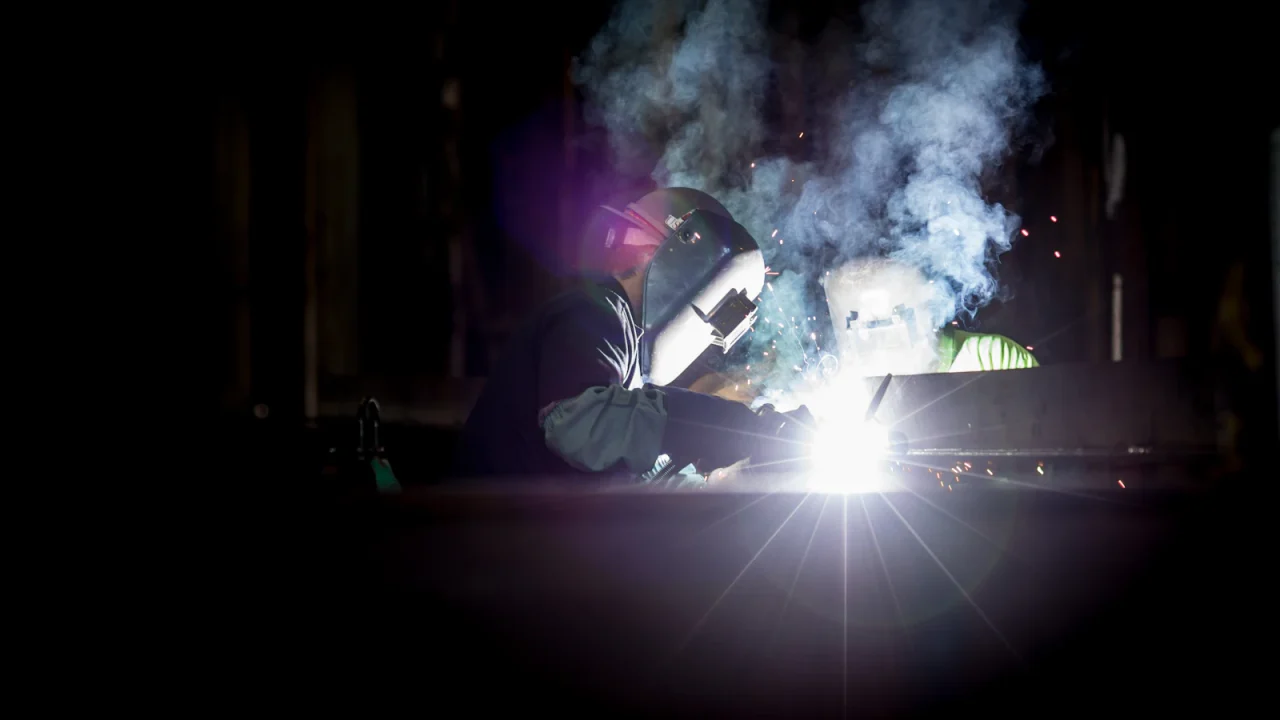
Welding injures people in six predictable ways: arc radiation burns eyes and skin, sparks and hot metal burn you and start fires, fumes and gases get into your lungs, the welding circuit can shock you, compressed gas cylinders can fail violently, and grinding throws noise and particles at your face. Each one has a known control, and most of those controls are habits and inexpensive gear, not major purchases.
On this page
This guide takes the hazards one at a time for a home garage or small shop. It is an overview: your machine’s manual, the safety data sheets for your consumables, and hands-on instruction take priority.
The six hazards at a glance
| Hazard | What it causes | Main controls |
|---|---|---|
| Arc radiation (UV, visible, IR) | Arc eye, skin burns | Correct filter shade, safety glasses under the helmet, covered skin, screens for bystanders |
| Sparks, spatter, hot metal | Burns, fires | Flame-resistant clothing, combustibles 35 ft away or shielded, extinguisher within reach, 30-minute fire watch |
| Fumes and gases | Short- and long-term illness | Ventilation, head out of the plume, local extraction, respirator when ventilation is not enough |
| Electric shock | Shock, burns, falls | Dry gloves and clothing, dry floor, intact cables, no bare skin on electrode or work |
| Gas cylinders | Violent pressure release | Chained upright, capped when moved, kept away from arc and heat |
| Grinding | Eye injury, hearing loss | Safety glasses plus face shield, hearing protection, guards in place |
Arc radiation: eyes and skin
A welding arc gives off intense ultraviolet (UV), visible, and infrared light. UV does the damage you don’t feel at the time: it burns the surface of the eye, an injury called arc eye or welder’s flash, and it burns bare skin like a fast sunburn. Symptoms often show up hours later.
- Wear a helmet with a filter shade matched to your process and amperage. The helmet shade guide has the chart.
- Wear ANSI Z87.1 safety glasses with side shields under the helmet, every time.
- Cover all skin. UV reflects off light walls, concrete, and shiny metal.
- Screen the arc from anyone who could see it, and keep children and pets out.
Burns and fire
Sparks and spatter travel farther than most people expect, and they can smolder in sawdust, cardboard, or rags long after you have packed up. OSHA’s welding standard sets the working rule: move combustibles at least 35 feet from the work, or protect them with flame-resistant covers or sheet metal guards. If you can do neither, don’t weld there.
Keep a fire extinguisher within reach, and stay to watch the area afterward. OSHA requires a fire watch of at least half an hour after welding stops. Treat that as the floor. The home welding area setup guide covers clearing and shielding a garage.
For your own skin, wear flame-resistant cotton or leather with no cuffs or open pockets, as the PPE checklist sets out, and assume every piece of metal on the table is hot. Never weld or cut on a tank, drum, or container that has held fuel, solvent, or anything flammable. That is specialist work.
Fumes and gases
Welding fume is a cloud of very fine metal particles from the filler, the base metal, and any coating on it, mixed with gases such as ozone, nitrogen oxides, and carbon monoxide. NIOSH notes that most welding fume contains some manganese, and that prolonged overexposure is linked to nervous system damage.
The controls work in order. Keep your head out of the plume. Ventilate: open doors, move air across the work, and use local extraction at the arc if you weld indoors regularly. Add a respirator when ventilation is not enough, never as a substitute for it.
Some materials raise the stakes:
- Galvanized steel: zinc fume causes metal fume fever, a flu-like illness that arrives hours after exposure. Grind the coating back from the weld zone.
- Stainless steel: the fume contains chromium compounds, including hexavalent chromium, which is linked to lung cancer.
- Paint, plating, and oil: remove them from the weld area before you start.
- Chlorinated solvents: the arc can break down vapor from some brake cleaners and degreasers into highly toxic gases, including phosgene. Never use them to prep metal.
- Enclosed spaces: argon and carbon dioxide displace oxygen. Tanks, pits, and small closed rooms are confined-space work, not a home project.
Flux-shielded processes typically produce much more fume than gas-shielded ones, which matters if you run flux-core or stick in a garage.
Electric shock
When the machine is on, the electrode, the wire, the workpiece, and every metal part touching them are energized. Welding voltage is lower than wall-outlet voltage, but it is enough to injure or kill when your skin is wet or your body becomes the path between electrode and work.
- Wear dry gloves with no holes, and change out of damp clothing.
- Don’t weld standing in water or on wet ground.
- Never touch the electrode or wire with bare skin while you are in contact with the work.
- Inspect the power cord, leads, and gun or electrode holder before each session, and replace anything with damaged insulation.
- Have circuits and receptacles installed by a qualified electrician. 120V vs 240V welders explains what to ask for.
Compressed gas cylinders
A shielding gas cylinder holds gas at high pressure. If it falls and the valve breaks off, the escaping gas can turn it into a projectile. Keep it chained upright to a cart or wall, fit the valve cap whenever the regulator is off or the cylinder is being moved, and keep it away from the arc, sparks, and heat. Never let an electrode or the work clamp touch it. The MIG gas guide covers regulators and flow settings.
Noise and flying particles from grinding
Grinding, wire brushing, and slag chipping are part of nearly every welding job, and AWS notes that flying particles cause the majority of workplace eye injuries. Wear safety glasses and a face shield for grinding, because a raised welding helmet protects nothing. Leave the grinder’s guard on, and aim the sparks away from people, cylinders, and anything that burns.
Grinding is also loud enough to damage hearing over time, so wear earplugs or earmuffs. The welding safety gear guide has the full kit list.
Frequently asked questions
Can I weld in my garage with the door open?
What does arc eye feel like, and what should I do about it?
Is it safe to weld galvanized steel at home?
Sources and further reading
Keep reading
Related guides
Guide
Welding Helmet Shade Guide: Which Lens Shade Do You Need?
Most home MIG, stick and TIG welding needs a shade 10 to 12 lens; this chart gives OSHA minimum and comfort shades…
Guide
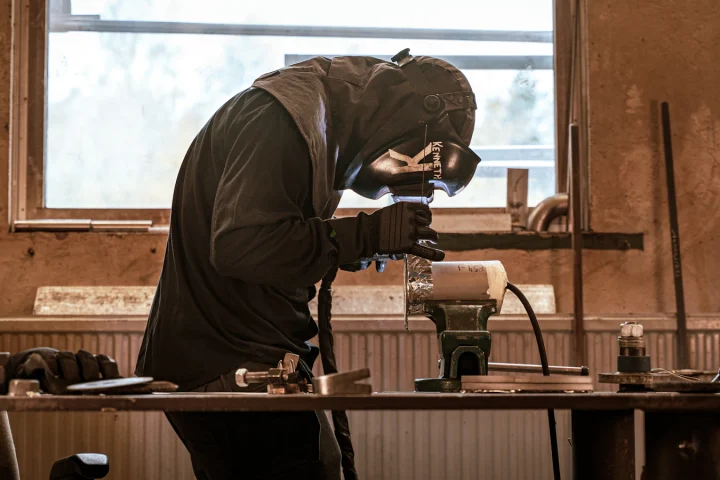
How to Set Up a Safe Home Welding Area
A safe home welding area needs bare concrete, combustibles moved 35 feet away or shielded, ventilation, a suitable circuit and a fire…
Safety
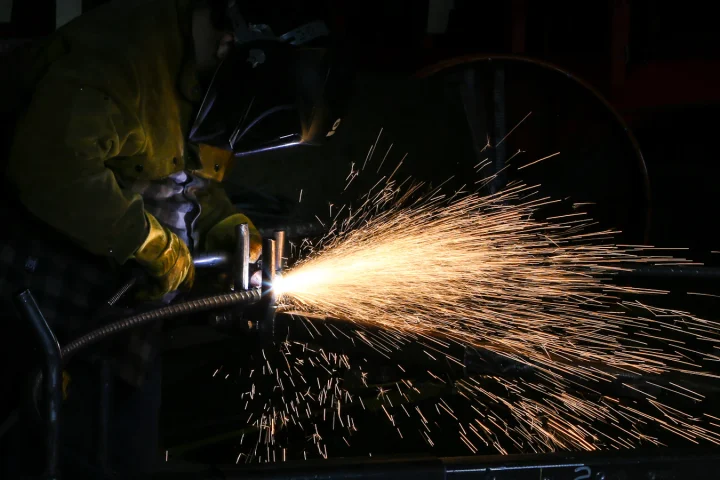
Welding PPE Checklist: What to Wear Before You Strike an Arc
Before you weld, put on a helmet, safety glasses, a flame-resistant jacket, leather gloves, cuffless pants over leather boots and hearing protection.