Buying guide
TIG Welder Buying Guide: AC/DC, Pedals and Features That Matter
How to choose a TIG welder: DC or AC/DC output, start method, foot pedal, pulse and the argon kit you need, in plain terms.
WelderGuru is reader-supported. As an Amazon Associate we earn from qualifying purchases made through links on this page, at no extra cost to you. Learn more.
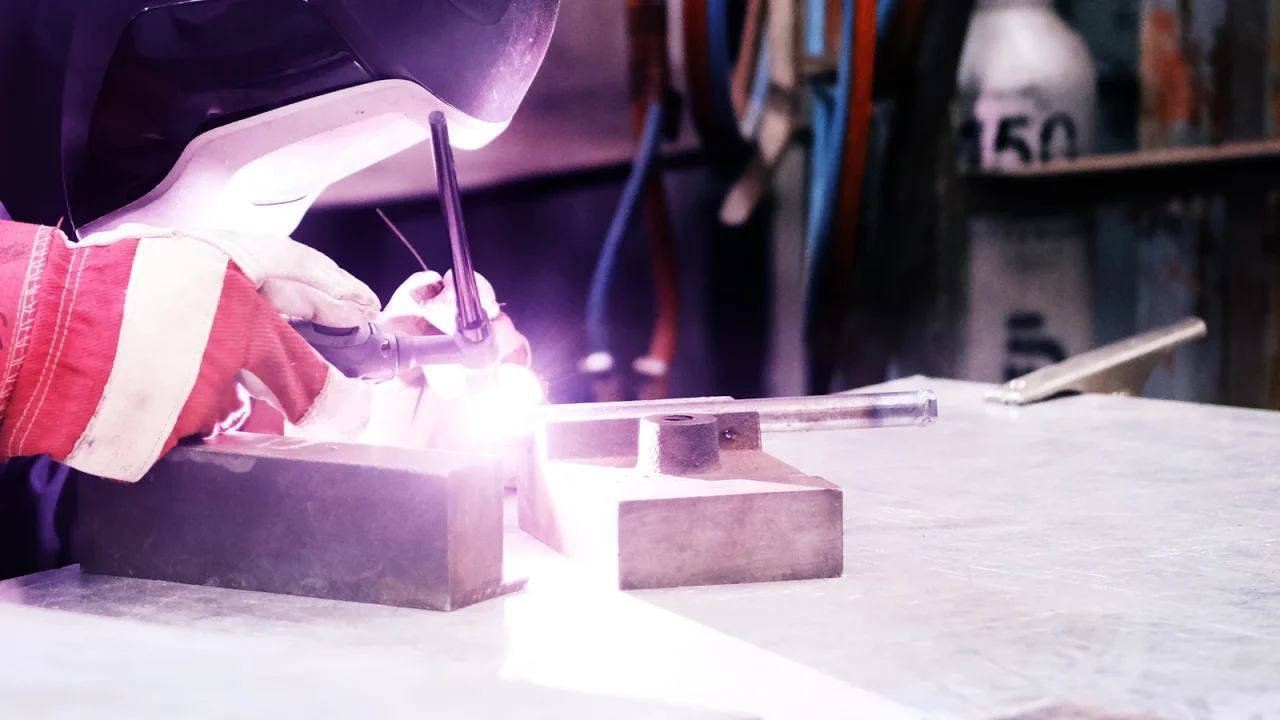
A TIG welder suits the patient hobbyist who wants precise, clean welds on thin steel, stainless or aluminum and accepts that the process is slow and takes more practice than any other. You hold the torch in one hand, feed filler rod with the other and usually control the heat with a foot pedal.
On this page
The decision that matters most is output type. A DC-only machine welds steel and stainless. Aluminum requires an AC/DC machine, and no accessory turns one into the other. Decide whether aluminum is in your plans before you look at any other feature.
Who a TIG welder suits, and who should look elsewhere
TIG fits thin-wall tubing, sheet metal, stainless parts, small aluminum projects and any joint where appearance matters. It makes no spatter and very little smoke, and it gives you direct control of heat and filler. TIG welding basics explains the technique.
Look elsewhere if you want to finish projects quickly, weld outdoors or work on rusty or painted steel, because TIG demands clean metal and still air. A MIG welder is faster and easier for general fabrication, and a stick welder suits outdoor repairs. If you are undecided, MIG vs TIG vs stick compares all three.
TIG welder types compared
| Type | Best for | Process | Power | Key feature | Check price |
|---|---|---|---|---|---|
| DC lift-start TIG | Occasional TIG on steel at the lowest outlay | DC TIG and stick | 120V or dual-voltage | Lift start, usually with a gas valve on the torch and no pedal | See on Amazon (opens Amazon in a new tab) |
| DC TIG with high-frequency start | Learning on steel and stainless | DC TIG, usually stick as well | 120V or dual-voltage | Non-contact start, pedal socket, pre-flow and post-flow | See on Amazon (opens Amazon in a new tab) |
| AC/DC TIG | Aluminum as well as steel and stainless | AC and DC TIG, usually stick as well | Dual-voltage or 240V | AC balance and frequency controls | See on Amazon (opens Amazon in a new tab) |
| AC/DC TIG with pulse | Thin material and tighter heat control | AC and DC TIG with pulse | Dual-voltage or 240V | Pulse lowers heat input on thin sheet | See on Amazon (opens Amazon in a new tab) |
| Multi-process with TIG | Mostly MIG, with occasional TIG on steel | MIG, flux-core, stick and lift TIG | Usually dual-voltage | TIG is usually DC only, and the torch is often extra | See on Amazon (opens Amazon in a new tab) |
Features vary widely within each type, so confirm them on the product listing and in the manual. If TIG is a side interest, the multi-process welder guide covers the compromises.
Specifications that matter on a TIG welder
- Amperage range. The rough rule of 1 amp per .001 inch of steel works as a starting point for TIG, and aluminum needs more because it carries heat away quickly. Many hobby machines top out near 200 A. A low minimum matters for thin sheet.
- Start method. High-frequency start strikes the arc without the tungsten touching the work. Lift start needs a touch, which is workable on steel but can contaminate the tungsten.
- Remote amperage control. A foot pedal lets you vary heat during the weld and taper off at the end. Check for a pedal socket and whether a pedal is included.
- AC controls. On AC/DC machines, balance sets the split between cleaning action and penetration, and frequency narrows or widens the arc.
- Gas control. A built-in solenoid with pre-flow and post-flow shields the tungsten and puddle before and after the arc. Basic lift-start setups rely on a manual valve.
- Pulse. Alternates between high and low current to limit heat on thin material.
- Duty cycle and input voltage. Duty cycle is the share of a 10-minute period you can weld at a stated amperage, so compare machines at the same amperage. Dual-voltage machines give reduced output on 120V; see 120V vs 240V welders.
- Torch, warranty and consumables. An air-cooled torch covers most hobby work. Check that it takes standard collets, cups and tungsten sizes, and compare warranty terms.
Best for beginners
DC TIG welder with high-frequency start
Why consider it
- High-frequency start avoids touching the tungsten to the work
- A pedal socket allows heat control through the weld; the pedal may be sold separately
- Most also run stick electrodes, which adds outdoor repair capability
Best for: Learning TIG on mild steel and stainless without paying for AC output
Check price on Amazon (opens Amazon in a new tab)
Type-level recommendation. Compare current models, specifications and prices on Amazon. We may earn a commission.
Best for aluminum
AC/DC TIG welder
Why consider it
- AC output is required for aluminum, and DC covers steel and stainless
- AC balance and frequency adjust cleaning action and arc width
- Usually dual-voltage or 240V, with full output only on 240V
Best for: Hobbyists who plan to weld aluminum as well as steel and stainless
Check price on Amazon (opens Amazon in a new tab)
Type-level recommendation. Compare current models, specifications and prices on Amazon. We may earn a commission.
Best for occasional TIG
DC stick welder with lift TIG
Why consider it
- Light inverter machines that are often dual-voltage
- The TIG torch is usually optional and has a manual gas valve
- Most have no pedal or high-frequency start, and none weld aluminum
Best for: Stick users who want to try TIG on steel before buying a dedicated machine
Check price on Amazon (opens Amazon in a new tab)
Type-level recommendation. Compare current models, specifications and prices on Amazon. We may earn a commission.
Other kit and running costs
TIG needs a cylinder of 100% argon and a regulator or flowmeter. Budget as well for tungsten electrodes, a way to grind them, filler rod matched to each metal, and spare cups and collets.
Running costs are mostly argon, because TIG is slow and gas flows before and after every weld. Check that your helmet is rated for low-amperage TIG, since some lenses do not react reliably to a small arc; the welding helmet shade guide explains the ratings. Thin TIG gloves give the feel you need to feed filler.
Common buying mistakes
- Buying a DC-only machine and expecting to weld aluminum.
- Assuming the pedal, torch or regulator is included. Read the accessories list.
- Treating multi-process lift TIG as equal to a dedicated machine. It usually lacks a pedal, high-frequency start and AC.
- Overlooking input power. Aluminum draws more amperage, so a machine that manages thin steel on 120V may need 240V for aluminum. Use a qualified electrician for any new circuit or outlet.
Frequently asked questions
Do I need an AC/DC machine to TIG weld aluminum?
Can I learn TIG without a foot pedal?
Is a 120V TIG welder worth buying?
Can I use my MIG gas for TIG welding?
Sources and further reading
Related gear on Amazon
Shortcuts to current Amazon listings for the items mentioned in this guide. These are affiliate links.
Tools that help with this decision
- Welder Match Quiz — Ten quick questions that match you to a type of welder.
- Amperage Calculator — Estimate the amperage range for your material and process.
- Power Compatibility Checker — Verify voltage, breaker, and outlet before buying.
- Setup Generator — Build a safety-first setup checklist.