Buying guide
Welding Safety Gear: The Complete PPE Buying Guide
What welding safety gear to buy first: helmet, glasses, gloves, jacket, boots, hearing protection, respirator, fire extinguisher and screens.
WelderGuru is reader-supported. As an Amazon Associate we earn from qualifying purchases made through links on this page, at no extra cost to you. Learn more.
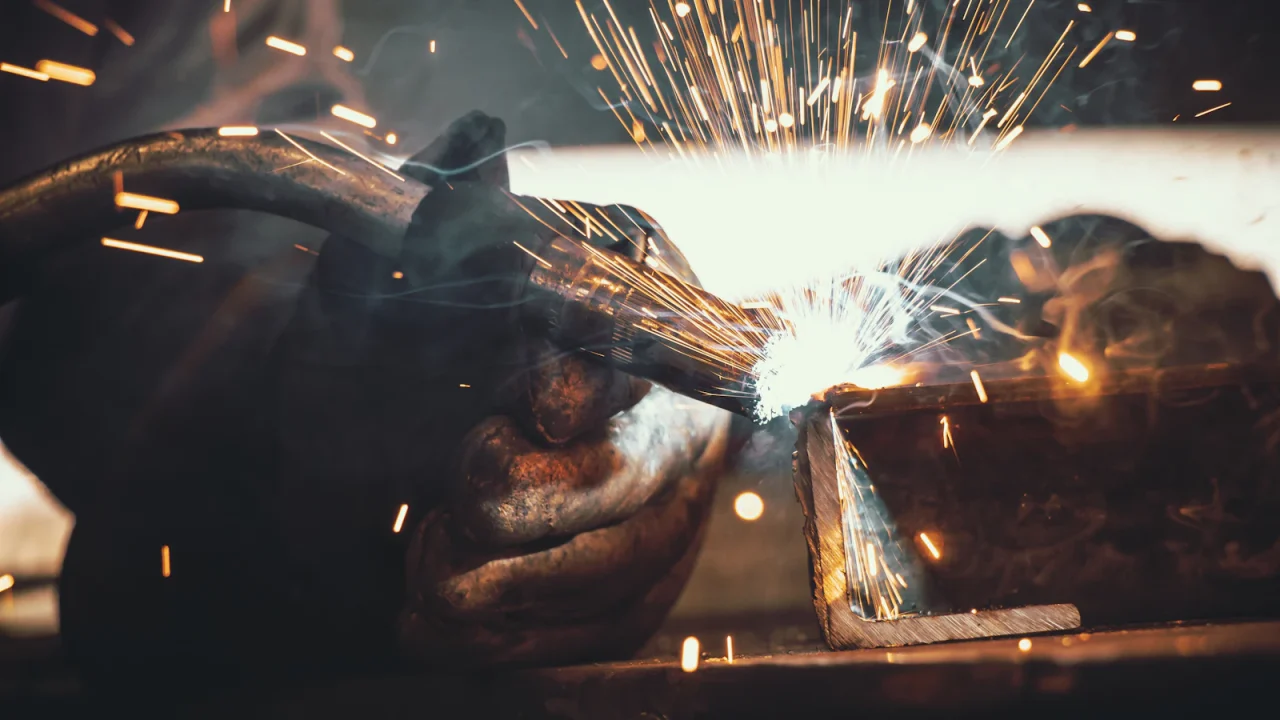
Buy safety gear in the order the hazards arrive. Arc light, sparks and hot metal start with the first weld, so a helmet, safety glasses, gloves, flame-resistant clothing, leather boots and a fire extinguisher come before you strike an arc. Hearing protection, a respirator and screens follow as soon as your tools, materials and space call for them.
On this page
Budget for this kit alongside your first welder. None of it replaces the machine’s manual, the regulations that apply to you or proper instruction. The PPE checklist covers how to wear it.
The main gear types compared
| Type | Best for | Key feature | Trade-off | Check price |
|---|---|---|---|---|
| Auto-darkening welding helmet | Every arc welding process | Variable-shade lens with a Z87.1 marking | Batteries and sensors need checking | See on Amazon (opens Amazon in a new tab) |
| Safety glasses | Under the helmet, and for chipping and grinding | Z87.1 marking and side shields | Lenses scratch and need replacing | See on Amazon (opens Amazon in a new tab) |
| Flame-resistant cotton jacket | MIG, TIG and light stick work | Treated cotton, lighter than leather | Treatment can wear out with washing | See on Amazon (opens Amazon in a new tab) |
| Leather jacket, sleeves or apron | Stick, flux-core and overhead welding | Leather stands up to heavy spatter | Heavy and warm | See on Amazon (opens Amazon in a new tab) |
| Half-mask particulate respirator | Fume that ventilation alone cannot control | Low-profile filters made to fit under a helmet | Needs a face seal, and does not remove gases | See on Amazon (opens Amazon in a new tab) |
| Welding blanket or screen | Shielding combustibles and bystanders | Flame-resistant fabric or a filtering curtain | Takes up space and wears with use | See on Amazon (opens Amazon in a new tab) |
What to buy first
- Helmet and safety glasses. Arc radiation can burn unprotected eyes quickly.
- Gloves. Dry leather welding gloves matched to your process.
- Jacket, pants and boots. Full coverage in flame-resistant cotton or leather.
- Fire extinguisher. Within reach before the first spark.
- Hearing protection and a face shield. Needed as soon as you grind.
- Respirator. Before you weld coated or stainless metal, or run high-fume processes indoors.
- Screens and blankets. As soon as anyone else, or anything flammable, shares the space.
Head, eyes and ears
Choose a helmet by its lens, using the welding helmet guide and the shade guide. Safety glasses should carry the Z87.1 marking and have side shields. AWS advises wearing them under any helmet or face shield, because chips and grinding fragments can get under the hood.
A flame-resistant welding cap keeps sparks out of your hair. For grinding, add a Z87.1 face shield over the glasses, plus earplugs or earmuffs, which AWS notes also keep sparks out of your ears. Compare the noise reduction rating on the packaging.
Body, hands and feet
A flame-resistant cotton jacket suits most MIG and TIG work. Leather, or cotton with leather sleeves, suits stick, flux-core and overhead welding. Sleeves and an apron add leather where you need it. Look for a stand-up collar, closures at the wrist and no open pockets. Avoid synthetics, and avoid cuffs on pants.
Gloves depend on the process, as the welding gloves guide explains. For boots, AWS recommends leather, safety-toed, high-topped boots with a compliance mark inside. Pant legs go over the boot tops so sparks cannot drop in.
Respirators
Ventilation comes first, and a respirator covers what ventilation cannot. Welding fume is fine particulate, so the usual choice is a reusable half-mask with particulate filters shaped to fit under a helmet. Selection depends on the fume hazard, so follow the respirator maker’s guidance for your metal and process, and look for the NIOSH approval marking. NIOSH notes that effectiveness depends heavily on proper fit and use. Particulate filters do not remove gases or supply oxygen. Welding safety basics covers fume by material.
Fire extinguisher, screens and blankets
Keep an extinguisher within reach of where you stand, on the exit side of the work. A multipurpose dry chemical (ABC) type is the usual choice for a home shop because it is rated for ordinary combustibles, flammable liquids and energized electrical equipment.
Welding blankets cover whatever cannot be moved out of spark range, and welding screens block the arc from anyone who could see it. The home welding area guide explains where to put both.
Body protection
Flame-resistant cotton welding jacket
Why consider it
- Treated cotton resists ignition and does not melt the way synthetic fabric does
- Lighter and cooler than leather, so it is easier to keep on in a warm garage
- Stand-up collar and wrist closures cover the gaps where sparks and UV get in
Best for: Home welders doing MIG, TIG or light stick work who want full coverage without the weight of leather
Check price on Amazon (opens Amazon in a new tab)
Type-level recommendation. Compare current models, specifications and prices on Amazon. We may earn a commission.
Fume protection
Half-mask respirator with particulate filters
Why consider it
- Reusable facepiece with replaceable particulate filters
- Low-profile filter shapes are made to fit under a welding helmet
- NIOSH approval label and markings identify a certified respirator
Best for: Welders whose ventilation cannot keep fume out of their breathing zone
Check price on Amazon (opens Amazon in a new tab)
Type-level recommendation. Compare current models, specifications and prices on Amazon. We may earn a commission.
Common buying mistakes
- Spending the whole budget on the welder. Protective gear is part of the cost of starting.
- Wearing synthetics for a quick tack. The arc is as bright and the spatter as hot on a one-second weld.
- Relying on a dust mask. A nuisance mask is not a respirator, and no respirator replaces ventilation.
- Buying a bundle unchecked. Check each item in a kit for its own markings and fit.
Care, inspection and when to replace
Check the kit before each session: helmet lens uncracked, gloves dry with no holes, clothing free of holes, frays and oil. Wash flame-resistant clothing the way its maker directs, because AWS notes that treated fabric can lose some protection after repeated washing. Change respirator filters on the maker’s schedule, and check the extinguisher’s gauge. Replace damaged items instead of patching them.
Frequently asked questions
What safety gear do I need to start welding?
Do I need a respirator for hobby welding?
Is a leather welding jacket better than flame-resistant cotton?
Can I wear ordinary work boots for welding?
Sources and further reading
Related gear on Amazon
Shortcuts to current Amazon listings for the items mentioned in this guide. These are affiliate links.
Tools that help with this decision
- Welder Match Quiz — Ten quick questions that match you to a type of welder.
- Amperage Calculator — Estimate the amperage range for your material and process.
- Power Compatibility Checker — Verify voltage, breaker, and outlet before buying.
- Setup Generator — Build a safety-first setup checklist.