Buying guide
Multi-Process Welder Buying Guide: One Machine, Several Processes
How to choose a multi-process welder: what the TIG side really covers, input power, duty cycle and which accessories are in the box.
WelderGuru is reader-supported. As an Amazon Associate we earn from qualifying purchases made through links on this page, at no extra cost to you. Learn more.
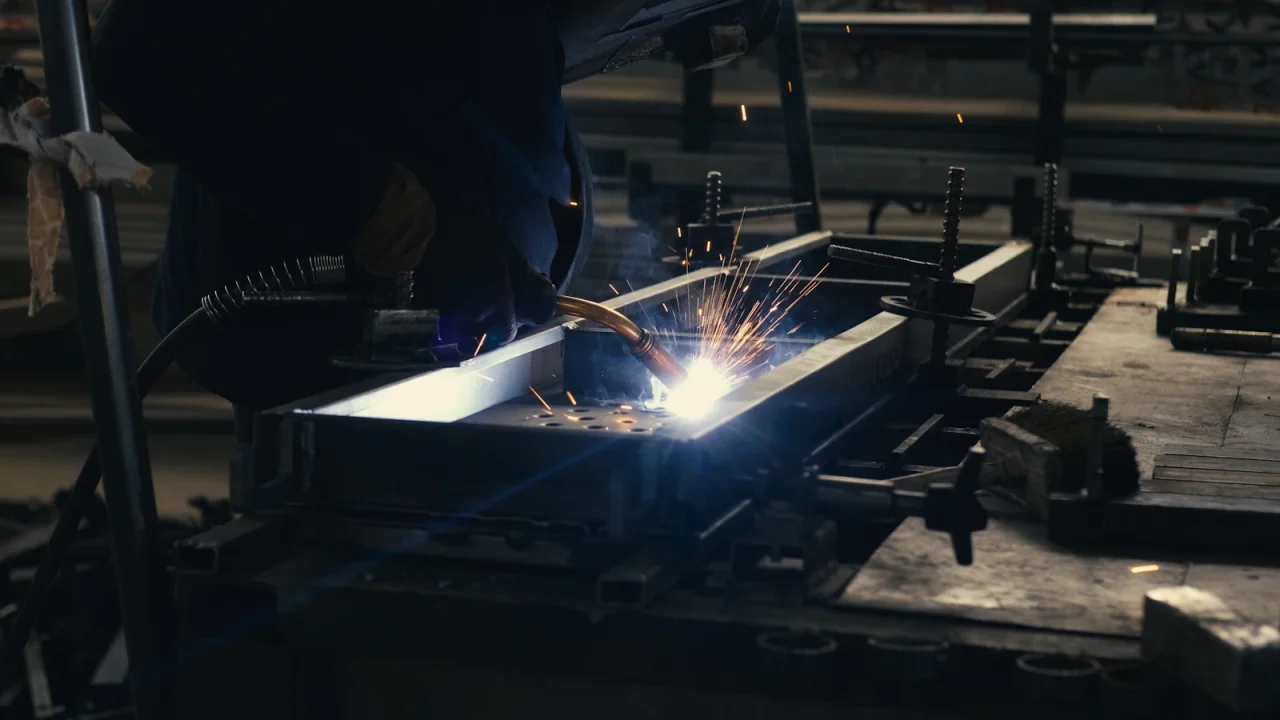
A multi-process welder suits the home fabricator who wants MIG, flux-core, stick and basic TIG from one inverter power source, either because the garage has room for one machine or because you have not settled on a process. It is a poor fit if you will only run wire, or if TIG is the main reason you are buying.
On this page
The decision that matters most is how much the TIG side counts. On most multi-process machines TIG is DC-only with a lift start and no foot pedal, which covers steel and stainless but not aluminum.
Who this suits (and who should look elsewhere)
A multi-process machine makes sense when your work is mixed: MIG for garage fabrication, stick for outdoor repairs on thicker or less-than-clean steel, and occasional DC TIG on steel or stainless. It also suits learners who want to try each process before committing.
Look elsewhere in three cases. If you will only run wire, a dedicated MIG welder of similar output is simpler to set up. If aluminum TIG is the goal, an AC/DC machine from the TIG welders guide is the right tool. If the lowest outlay matters most, a flux-core welder gets you welding for less.
Multi-process welder types compared
| Type | Best for | Process | Power | Key feature | Check price |
|---|---|---|---|---|---|
| 120V multi-process | Light repairs and thin steel on household power | MIG, flux-core, stick, lift TIG | 120V | Compact, with output limited to roughly 140 A | See on Amazon (opens Amazon in a new tab) |
| Dual-voltage, 200 A class | Most home garages | MIG, flux-core, stick, DC lift TIG | 120V/240V | Full output on 240V, reduced on 120V | See on Amazon (opens Amazon in a new tab) |
| 240V, 250 A class | Thicker steel and longer welds | MIG, flux-core, stick, DC TIG | 240V | Higher amperage and duty cycle | See on Amazon (opens Amazon in a new tab) |
| Multi-process with AC/DC TIG | Aluminum TIG alongside MIG and stick | MIG, flux-core, stick, AC/DC TIG | 240V or dual voltage | AC output, usually with pedal support | See on Amazon (opens Amazon in a new tab) |
The specifications that matter
Output for each process
Read the amperage range per process, because it differs between MIG, stick and TIG. For MIG on steel, allow about 1 amp per .001 inch of thickness. A 120V machine tops out around 140 A, enough for thin sheet up to roughly 3/16 inch in a single pass. A 240V machine of 180 to 250 A handles roughly 5/16 to 1/2 inch. For stick, check which electrode types and diameters the manual lists.
What the TIG side includes
Check four things: DC only or AC/DC, lift start or high-frequency start, whether a foot pedal connects, and whether a TIG torch is in the box. Lift-start DC is fine for learning on steel. It is not a substitute for an AC/DC TIG machine.
Duty cycle
Duty cycle is the percentage of a 10-minute period the machine can weld at a stated amperage. A rating of 30% at 90 A means 3 minutes of welding and 7 minutes of cooling. Ratings differ by process and input voltage, so compare like with like at the same amperage. The duty cycle calculator converts a rating into minutes.
Input power
Dual voltage is the most useful feature on this type. On 120V, many machines call for a dedicated 20 A circuit and deliver reduced output. On 240V they commonly use 30 to 50 A circuits, per the nameplate. Have a qualified electrician install or confirm any circuit and receptacle. The 120V vs 240V comparison covers the trade-offs.
Accessories and consumables
A MIG gun, electrode holder and ground clamp are normally included. A TIG torch, gas regulator, foot pedal and spool gun may not be. Check that contact tips, nozzles and liners are easy to buy. Every figure here is typical for the type, so confirm the exact numbers on the product listing and in the manual.
Three types worth shortlisting
Best fit for most home shops
Dual-voltage multi-process welder, 200 A class
Why consider it
- Runs MIG, flux-core, stick and DC lift TIG from one inverter
- Works on a 120V circuit at reduced output and reaches full output on 240V
- Light enough to carry or keep on a small cart
Best for: Garage fabricators who want MIG, stick for outdoor repairs and a path to 240V
Check price on Amazon (opens Amazon in a new tab)
Type-level recommendation. Compare current models, specifications and prices on Amazon. We may earn a commission.
For household power only
120V multi-process welder
Why consider it
- Plugs into a household outlet, though many call for a dedicated 20 A circuit
- Output is limited to roughly 140 A, so thick plate is out of reach
- Compact and light enough for repairs away from the bench
Best for: Renters and small garages welding thin to moderate mild steel
Check price on Amazon (opens Amazon in a new tab)
Type-level recommendation. Compare current models, specifications and prices on Amazon. We may earn a commission.
If aluminum TIG matters
Multi-process welder with AC/DC TIG
Why consider it
- AC TIG output welds aluminum, which DC-only machines cannot do
- Usually adds high-frequency start and a foot pedal connection
- Costs more and has more settings to learn than a DC-only model
Best for: Buyers who need aluminum TIG and wire-feed welding from one machine
Check price on Amazon (opens Amazon in a new tab)
Type-level recommendation. Compare current models, specifications and prices on Amazon. We may earn a commission.
Other kit and running costs to budget for
Running every process costs more than running one. MIG on mild steel uses a cylinder of 75/25 argon/CO2, and TIG needs a separate cylinder of pure argon. Add wire, stick electrodes, tungsten and filler rod, plus any torch, regulator or pedal that was not included. The MIG welding gas guide explains cylinder choices, and the welding safety gear guide covers the helmet, gloves and jacket.
Common buying mistakes
- Buying it for TIG without reading the TIG spec. DC lift start is the norm, and aluminum needs AC.
- Assuming a spool gun will work. Support varies by machine, so look for it in the manual.
- Forgetting the changeover. Solid wire runs DCEP and self-shielded flux-core runs DCEN. The wrong polarity gives heavy spatter and a poor weld.
Frequently asked questions
Can a multi-process welder TIG weld aluminum?
Is a multi-process welder a good first welder?
What gas does a multi-process welder need?
Will a dual-voltage multi-process welder run on a household outlet?
Sources and further reading
Related gear on Amazon
Shortcuts to current Amazon listings for the items mentioned in this guide. These are affiliate links.
Tools that help with this decision
- Welder Match Quiz — Ten quick questions that match you to a type of welder.
- Amperage Calculator — Estimate the amperage range for your material and process.
- Power Compatibility Checker — Verify voltage, breaker, and outlet before buying.
- Setup Generator — Build a safety-first setup checklist.