Buying guide
Stick Welder Buying Guide: Simple Machines for Tough Jobs
How to choose a stick welder: AC or DC output, amperage, duty cycle, arc controls and input voltage for home repairs and outdoor work.
WelderGuru is reader-supported. As an Amazon Associate we earn from qualifying purchases made through links on this page, at no extra cost to you. Learn more.
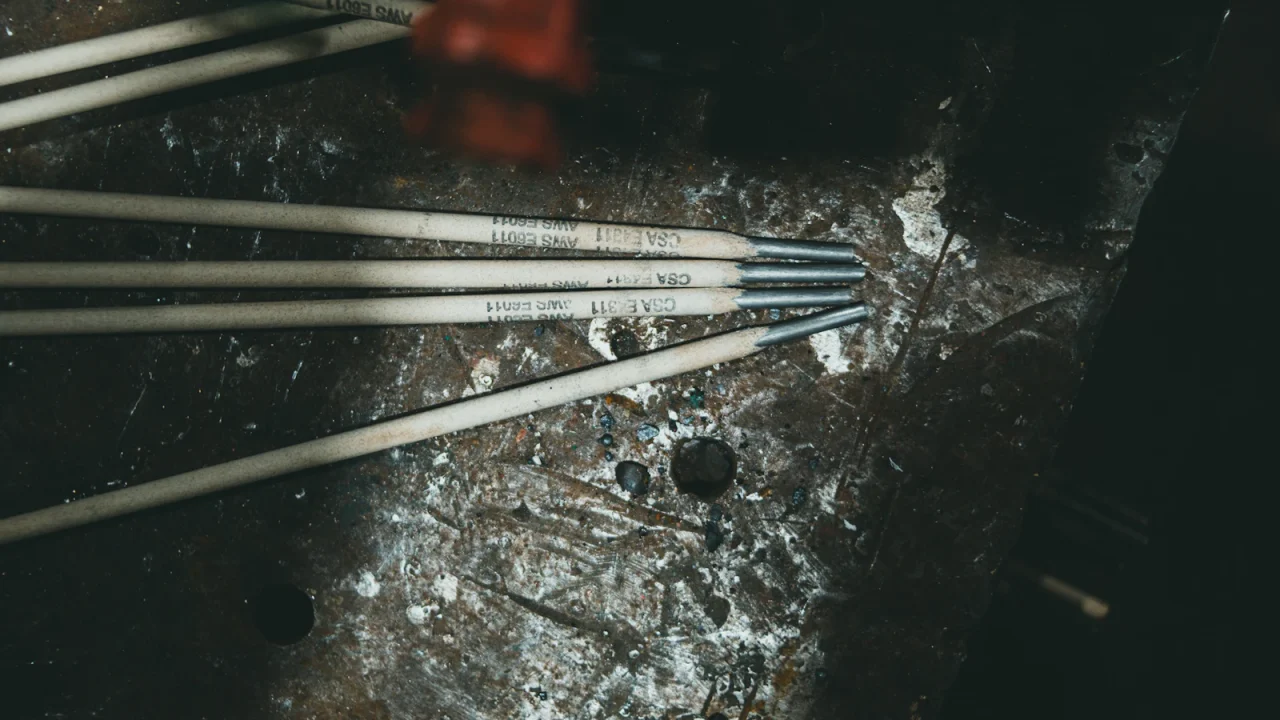
A stick welder suits anyone who repairs thick, rusty or painted steel, often outdoors: gates, fences, farm implements and heavy brackets. The machine is the simplest in welding, just a power source, an electrode holder and a ground clamp, with no gas and no wire feeder.
On this page
The decision that matters most is output type. A DC inverter runs nearly every common electrode, strikes easily and weighs little. An AC-only transformer, the traditional buzz box, is rugged but heavy and limited to AC-rated rods. For most home buyers a DC inverter is the better starting point.
Who a stick welder suits, and who should look elsewhere
Stick fits outdoor repair and heavier material. The flux coating on the electrode makes its own shielding, so wind is not a problem, and rods such as 6011 cope with rust, paint and mill scale. Stick welding basics covers rod choice and technique.
Look elsewhere for thin material. Sheet metal and thin-wall tubing burn through easily, and a MIG welder or flux-core welder is much easier there. Stick also takes more practice than wire-feed and leaves slag to chip. For indoor work where appearance matters, MIG or a TIG welder is the better fit. Trailer frames, vehicle chassis and anything structural need qualified procedures, whatever the machine.
Stick welder types compared
| Type | Best for | Process | Power | Key feature | Check price |
|---|---|---|---|---|---|
| 120V DC inverter | Light repairs with small rods | DC stick | 120V; many call for a dedicated 20 A circuit | Very light; typically suited to 1/16 to 3/32-inch rods | See on Amazon (opens Amazon in a new tab) |
| Dual-voltage DC inverter | Most home and property repairs | DC stick, often lift TIG | 120V or 240V, with reduced output on 120V | Runs 1/8-inch rods comfortably on 240V | See on Amazon (opens Amazon in a new tab) |
| 240V DC inverter | Thicker steel and larger rods | DC stick, often lift TIG | 240V; commonly 30 to 50 A circuits, per the nameplate | More output and duty cycle for 1/8 and 5/32-inch rods | See on Amazon (opens Amazon in a new tab) |
| AC transformer (buzz box) | A simple, rugged workshop machine | AC stick only | 240V | Heavy, with few parts; limited to AC-rated rods | See on Amazon (opens Amazon in a new tab) |
| Multi-process with stick | Stick plus wire-feed in one unit | MIG, flux-core, stick and lift TIG | Usually dual-voltage | Stick is one mode among several | See on Amazon (opens Amazon in a new tab) |
These are typical characteristics, so confirm output and rod capacity on the product listing and in the manual. Related guides cover multi-process welders and portable welders.
Specifications that matter on a stick welder
- Amperage range and rod size. Electrode diameter sets the amperage you need. As typical ranges, 3/32-inch rods run at roughly 40 to 110 A and 1/8-inch rods at roughly 75 to 160 A, depending on rod type. The machine should cover the range for your largest rod with some margin.
- Output type. DC runs nearly all common rods and gives a steadier arc. AC-only machines need AC-rated rods such as 6011 and 6013. Not every inverter runs 6010 well, so check the listing if you plan to use it.
- Duty cycle. The percentage of a 10-minute period you can weld at a stated amperage: 30% at 90 A is 3 minutes of welding and 7 minutes of cooling. Compare machines at the same amperage.
- Arc controls. Hot start boosts current briefly to help the rod strike. Arc force adds current when the arc gets short, so the rod does not stub out. Anti-stick cuts output if the rod freezes to the work.
- Input voltage. 120V limits you to smaller rods, and dual-voltage machines give full output on 240V. See the 120V vs 240V comparison.
- Leads and accessories. Check lead length and the quality of the electrode holder and ground clamp, which are often light on low-cost machines. Where lift TIG is listed, the torch is usually extra.
- Warranty and support. Compare warranty length and where service is handled.
Best for beginners
Dual-voltage DC inverter stick welder
Why consider it
- Runs small rods on a 120V outlet and gives full output on 240V
- Hot start, arc force and anti-stick are common on this type
- Light enough to carry in one hand
Best for: Home and property repairs on steel 1/8 inch and thicker, indoors or out
Check price on Amazon (opens Amazon in a new tab)
Type-level recommendation. Compare current models, specifications and prices on Amazon. We may earn a commission.
Best for thicker steel
240V DC stick welder
Why consider it
- Higher output for larger electrodes and thicker material
- Longer duty cycle at mid-range amperage
- Needs a 240V circuit that matches the nameplate
Best for: Regular work on heavy sections with 1/8 and 5/32-inch rods
Check price on Amazon (opens Amazon in a new tab)
Type-level recommendation. Compare current models, specifications and prices on Amazon. We may earn a commission.
Best for mobile repairs
120V inverter stick welder
Why consider it
- Among the lightest welders sold, often with a shoulder strap
- Typically suited to 1/16 to 3/32-inch rods on thinner sections
- Output and duty cycle are limited, so check the rating at the amperage you need
Best for: Small repairs away from the workshop where only a household outlet is available
Check price on Amazon (opens Amazon in a new tab)
Type-level recommendation. Compare current models, specifications and prices on Amazon. We may earn a commission.
Other kit and running costs
Stick has the lowest running costs of the processes covered on this site. Electrodes are the only consumable, with no gas, wire, tips or liners to replace. Keep low-hydrogen rods such as 7018 sealed and dry, because they absorb moisture from the air.
You still need a helmet, heavy gloves, a jacket, a chipping hammer, a wire brush and an angle grinder. Stick throws sparks and spatter, so full coverage matters. The welding PPE checklist lists what to wear.
Common buying mistakes
- Buying an AC-only machine without realizing it limits rod choice.
- Expecting a small 120V machine to run 1/8-inch rods for long. Check the output and duty cycle at that amperage.
- Buying stick for sheet metal work.
- Ordering a 240V machine without a suitable circuit. Have a qualified electrician install any new circuit or outlet.
Frequently asked questions
Is stick welding hard to learn?
Should I buy an AC or DC stick welder?
Can a 120V stick welder run 1/8-inch rods?
Can I TIG weld with a stick welder?
Sources and further reading
Related gear on Amazon
Shortcuts to current Amazon listings for the items mentioned in this guide. These are affiliate links.
Tools that help with this decision
- Welder Match Quiz — Ten quick questions that match you to a type of welder.
- Amperage Calculator — Estimate the amperage range for your material and process.
- Power Compatibility Checker — Verify voltage, breaker, and outlet before buying.
- Setup Generator — Build a safety-first setup checklist.