How to Weld Mild Steel: The Beginner’s Material Guide
Mild steel is the easiest metal to learn welding on. This guide covers prep, process choice, wire and rod selection, fit-up, distortion and safety.
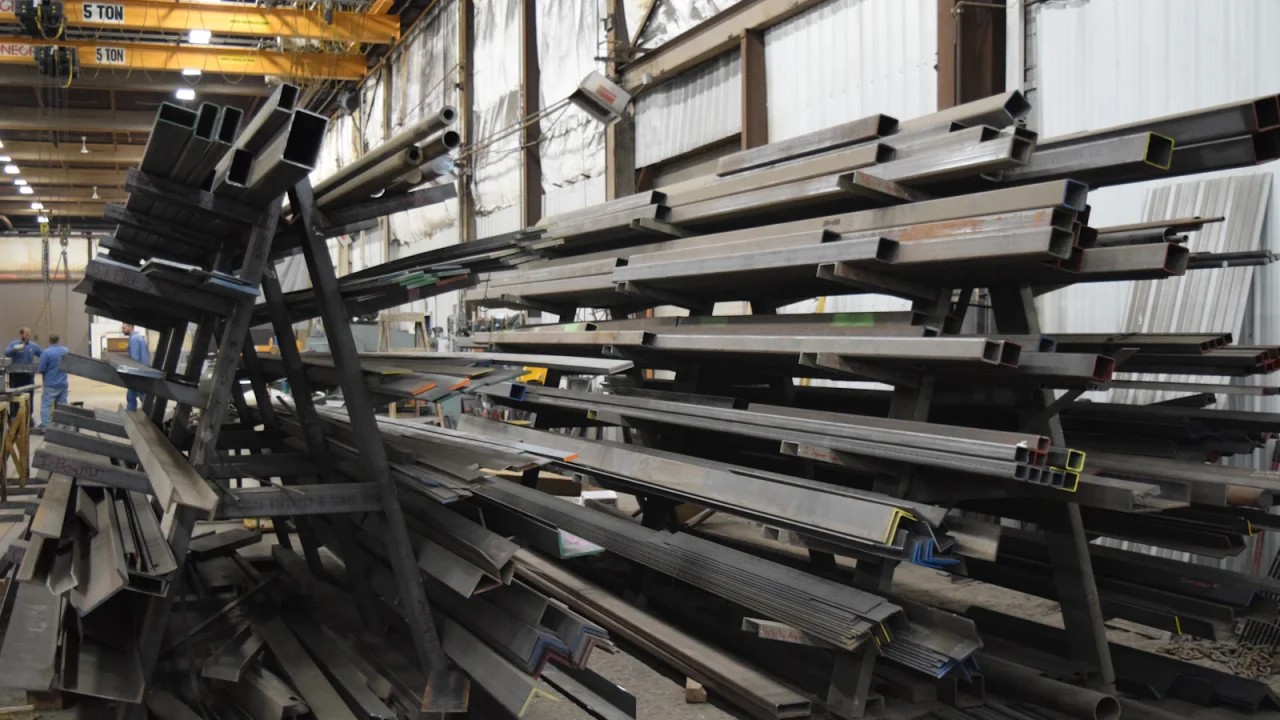
Mild steel is the right metal to learn on. It welds with every common process, tolerates imperfect settings and technique, costs less than other metals, and is what most home projects are made of. Clean the joint to bright metal, pick a process that suits the thickness and location, and use a general-purpose wire or rod.
On this page
This guide applies to general fabrication and repair of non-critical items, not structural, pressure or vehicle-frame work.
Why mild steel is the easiest metal to learn on
Mild steel, also called low-carbon steel, contains only a small amount of carbon, typically under about 0.3%. Most plate, angle, tube and flat bar sold at steel yards and hardware stores is mild steel, in grades such as A36 and 1018.
- It is forgiving. The low carbon content means it does not harden and crack easily when it cools, so ordinary sections need no preheat or special cooling.
- It shows you the heat. Steel glows before it melts, and the puddle is easy to see and read.
- It is cheap and easy to find. Practice scrap costs little, so mistakes do too.
Higher-carbon and alloy steels, such as spring steel and tool steel, look similar but can crack after welding.
Preparing the surface
Clean about an inch back from the joint on every face the weld will touch.
- Mill scale is the hard, blue-gray skin on hot-rolled steel. It interferes with fusion. Remove it with a grinder and flap disc until the metal is bright.
- Rust holds moisture and causes porosity. Remove it with a wire wheel or grinder.
- Paint, oil and grease burn into fumes and gas that end up in the weld. Grind paint off and wipe oil away with a suitable degreaser, then let it dry. Do not use chlorinated solvents or brake cleaner, which can form toxic gas under arc heat.
- Galvanizing is a zinc coating. It must be removed before welding, as covered in the safety section below.
Clean a patch for the work clamp as well. A clamp on rust or paint gives an unstable arc that is easy to mistake for a settings problem.
Choosing a process
The best process depends on thickness and location. The ranges below are general guides for typical home machines, so go by your machine’s capacity chart.
| Process | Suits thickness | Where it works best | Trade-offs |
|---|---|---|---|
| MIG with gas | Thin sheet up to about 1/4 inch or more, depending on the machine | Indoors, out of the wind | Easiest to learn and clean welds, but needs a gas cylinder and clean metal |
| Self-shielded flux-core | About 1/8 inch and thicker | Outdoors and in drafts | No gas needed, but more spatter and slag, and it burns through thin sheet easily |
| Stick | About 1/8 inch and thicker | Outdoors, on rusty or thick steel, repairs | Simple, inexpensive equipment, but harder to learn and poor on thin sheet |
| TIG | Thin sheet to about 3/16 inch | Indoors, on clean metal, visible welds | Most control and best appearance, but slow and the hardest to learn |
For more on each, see MIG welding basics, flux-core welding basics and stick welding basics.
Wire and rod choices
- ER70S-6 is the standard solid MIG wire for mild steel. It contains deoxidizers that help with light scale and is normally run with 75% argon / 25% CO2 on DC electrode positive.
- E71T-11 is the common self-shielded flux-core wire for small machines. It needs no gas, runs on DC electrode negative on most machines and leaves slag to chip off.
- E6011 is a deep-penetrating stick rod that runs on AC or DC and copes with rust and poor fit-up. The bead is rough.
- E6013 is a mild, easy-running rod with light penetration and a smooth bead. It suits thinner material and clean steel.
- E7018 is a low-hydrogen rod that gives strong, smooth welds. It must be kept dry, because the coating absorbs moisture.
- ER70S-2 or ER70S-6 rod is the usual TIG filler, with 100% argon.
For settings, start with the chart on your machine for the wire or rod diameter and the metal thickness. A rough cross-check for MIG on steel is about 1 amp for every .001 inch of thickness. Rod amperage ranges are printed on the electrode packaging. Treat these as starting points, confirm against your machine’s chart and manual, and test on scrap of the same thickness.
Fit-up, tacking and distortion control
Cut parts square, deburr the edges, and clamp them so they cannot move.
- Gaps. Thin sheet welds best with tight fit-up. On butt joints in thicker material, a small, even gap helps the weld reach the root.
- Bevels. On butt joints in steel of about 1/4 inch and thicker, grind a bevel on the edges and fill it with more than one pass.
- Tacks. Place small tack welds at the ends first, then at intervals along the joint. Check for square while the part can still be adjusted.
Weld metal shrinks as it cools and pulls the parts toward the weld. To manage it:
- Use plenty of tacks and clamp to a flat surface. A proper welding table makes this much easier.
- Weld in short sections and alternate sides and ends so heat is spread across the part.
- Tack the whole assembly before fully welding any joint.
Common problems
- Porosity: contaminated metal, or lost shielding gas from drafts, low flow or an empty cylinder. See weld porosity causes and fixes.
- Tall bead sitting on the surface: too little heat or travel too fast. Raise the setting one step or slow down.
- Burn-through: too much heat or travel too slow for the thickness. Lower the setting or move faster.
- Heavy spatter: wrong polarity, unbalanced voltage and wire speed, or long stickout. See MIG spatter causes and fixes.
- Slag trapped in the weld: with stick and flux-core, chip and brush each pass completely before welding over it.
The common beginner welding mistakes guide covers technique errors.
Galvanized steel and other safety points
Galvanized steel is coated with zinc. Welding through it produces dense white zinc oxide fume that causes metal fume fever, a flu-like illness with chills, nausea and headache. The zinc also causes porosity and spatter.
- Never weld galvanized steel without removing the coating first. Grind the zinc off at least 1 to 2 inches back from the joint on all sides, wearing a respirator while you grind.
- Weld with local exhaust or outdoors with the breeze carrying fume away from you, and wear a respirator rated for welding fume.
- If you do not know what a coating is, remove it before welding.
- Never weld or cut on any container that has held fuel or other flammable material.
The general precautions in welding safety basics apply to every job. Have a qualified electrician install any new outlet or circuit for a welder.
Frequently asked questions
What is the easiest way to weld mild steel as a beginner?
Do I have to remove mill scale before welding?
Which stick rod should I start with on mild steel?
Can I weld galvanized steel if I work outside?
Sources and further reading
Keep reading
Related guides
Material guide
How to Weld Aluminum: Processes, Prep and Common Problems
Aluminum needs AC TIG or MIG with a spool gun, pure argon and careful cleaning. This guide covers prep, filler choice, technique…
Buying advice
What Welder Should a Beginner Buy?
A beginner should usually buy a wire-feed welder: 120V flux-core for a low-cost start, or a gas-capable MIG machine for cleaner welds…
Comparison
MIG vs TIG vs Stick: Which Welding Process Should You Learn First?
MIG is the easiest welding process to learn first, stick suits outdoor work on rusty steel, and TIG offers the most control…