MIG Welding Gas: What to Use for Steel, Stainless and Aluminum
For MIG welding, use 75/25 argon/CO2 on mild steel, 100% argon on aluminum, and tri-mix or 98/2 argon/CO2 on stainless steel.
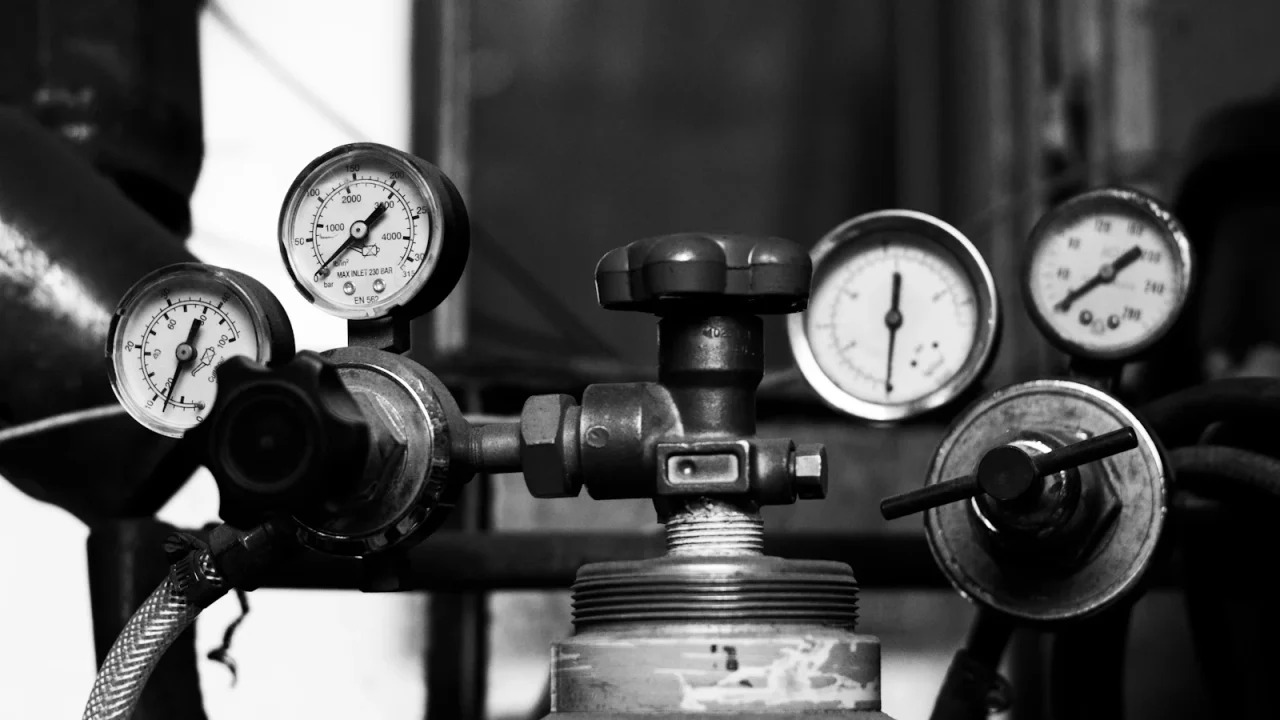
For MIG welding mild steel, use a mix of 75% argon and 25% carbon dioxide. For aluminum, use 100% argon. For stainless steel, use a helium/argon/CO2 tri-mix or a 98% argon / 2% CO2 blend.
On this page
Those choices cover nearly all home and hobby MIG work. Gas is not interchangeable between metals: 75/25 on aluminum, or pure argon on steel, gives welds that are porous, sooty or poorly fused, so change the cylinder whenever you change the material.
Gas by material at a glance
| Material | Typical wire | Shielding gas | Notes |
|---|---|---|---|
| Mild steel, general use | ER70S-6 | 75% argon / 25% CO2 | Low spatter and good bead shape from thin sheet to moderate plate |
| Mild steel, lowest gas cost | ER70S-6 | 100% CO2 | Deeper penetration, more spatter, rougher bead |
| Mild steel, thicker plate | ER70S-6 | 90% argon / 10% CO2 | For spray transfer, which needs higher machine output |
| Stainless steel | Stainless wire matched to the alloy | Tri-mix (helium/argon/CO2) or 98% argon / 2% CO2 | High-CO2 mixes harm corrosion resistance |
| Aluminum | ER4043 or ER5356 | 100% argon | Usually run with a spool gun |
| Self-shielded flux-core | E71T-11 or E71T-GS | None | The flux provides the shielding |
Wire and gas work as a pair, and both go with the polarity and settings covered in MIG welding basics. Check the wire manufacturer’s data sheet, which states the gas the wire is designed for.
Mild steel: 75/25, CO2 or 90/10
75% argon / 25% CO2, often sold as C25, is the default for good reasons. The argon stabilizes the arc and keeps spatter down, while the CO2 adds enough heat for sound fusion. It is the easiest gas to get clean results with in short-circuit transfer, the mode small machines use.
100% CO2 costs less and penetrates deeper, which can help on thicker steel with a low-powered machine. The arc is harsher, there is more spatter to clean up, and thin sheet is easier to burn through. CO2 cylinders also use a different valve fitting from argon and argon-mix cylinders, so you need a matching regulator or the correct adapter.
90% argon / 10% CO2 is for spray transfer, a hotter, smoother mode used on thicker plate in the flat and horizontal positions. It needs more voltage and amperage than many 120V machines deliver, so it is rarely a first cylinder.
Stainless steel: tri-mix or 98/2
Stainless resists corrosion because of its chromium content, and too much CO2 in the shielding gas works against that. The traditional choice for short-circuit MIG on small machines is a tri-mix that is mostly helium with small amounts of argon and CO2. Helium is expensive, so the cylinder costs more than a steel mix.
A 98% argon / 2% CO2 blend is the lower-cost alternative, used mainly with spray or pulsed transfer on more capable machines. Whichever you choose, do not run stainless wire on the 75/25 left over from steel work. Stainless fume contains hexavalent chromium, so fume control matters even more than it does on mild steel.
Aluminum: 100% argon
Aluminum needs a fully inert gas. Any CO2 or oxygen in the mix reacts with the molten metal and leaves a black, porous weld, so pure argon is the standard choice. Argon/helium blends exist for thick sections but are costly and seldom needed for hobby work.
ER4043 wire flows easily and suits general repair and fabrication. ER5356 is stiffer, which helps it feed, and is stronger as welded. Both are soft compared with steel wire, which is why aluminum is usually run through a spool gun. The same cylinder of pure argon also serves a TIG torch if you move on to TIG welding.
Setting the flow rate
A common starting range indoors is roughly 20 to 30 cubic feet per hour (CFH), read at the regulator while gas is flowing. Check the recommendation in your machine’s manual and adjust from there.
- Too little flow leaves the puddle exposed and causes porosity.
- Too much flow creates turbulence at the nozzle that draws air into the gas stream. That also causes porosity, and it empties the cylinder faster.
- Drafts from fans, open doors or wind push the gas aside. Block the draft before raising the flow. Outdoors, switching to flux-core wire is usually the better fix.
- Leaks and blockages mimic low flow. Brush soapy water on the fittings to find leaks, and clear spatter from the nozzle.
Cylinders: sizes, supply and safe handling
Shielding gas cylinders are sized by the cubic feet of gas they hold. Common small sizes are 40, 80 and 125 cubic feet. To estimate arc time, divide the capacity by your flow rate: an 80 cubic foot cylinder at 20 CFH gives about four hours with the trigger pulled. Larger cylinders need refilling less often. Local welding suppliers sell, exchange or lease cylinders and their policies vary, so ask before you buy one elsewhere.
A full cylinder holds gas at very high pressure. Chain or strap it upright to a cart or wall, keep the valve cap on whenever it is moved, and close the valve when you finish. Shielding gases are not poisonous, but they displace air, so never weld in an enclosed, unventilated space. The welding safety basics guide and the home welding area setup guide cover storage and ventilation.
Frequently asked questions
Can I use 100% argon to MIG weld steel?
Can I use 75/25 gas on stainless steel or aluminum?
How long does a MIG gas cylinder last?
Do I need gas with flux-core wire?
Sources and further reading
Keep reading
Related guides
Process guide
MIG Welding Basics: How It Works, What You Need and How to Start
MIG welding feeds solid wire through a gun under shielding gas, and this guide covers how it works, the gear you need…
Material guide
How to Weld Aluminum: Processes, Prep and Common Problems
Aluminum needs AC TIG or MIG with a spool gun, pure argon and careful cleaning. This guide covers prep, filler choice, technique…
Buying advice
What Welder Should a Beginner Buy?
A beginner should usually buy a wire-feed welder: 120V flux-core for a low-cost start, or a gas-capable MIG machine for cleaner welds…