MIG vs TIG vs Stick: Which Welding Process Should You Learn First?
MIG is the easiest welding process to learn first, stick suits outdoor work on rusty steel, and TIG offers the most control but takes longest.
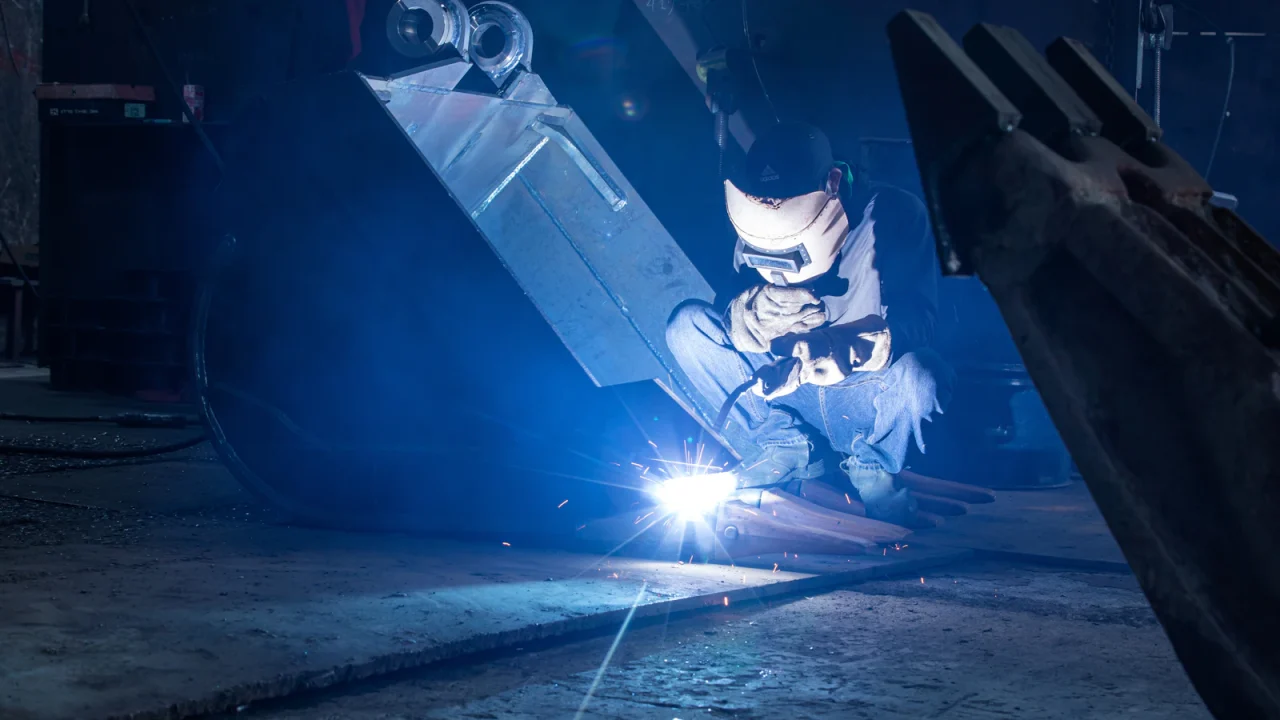
For a beginner working on mild steel in a garage, MIG is the process to learn first. The machine feeds the wire for you, the arc starts at the pull of a trigger, and you can produce usable welds on common steel thicknesses sooner than with any other process.
On this page
Stick makes more sense if you mostly weld outdoors on thicker or rusty steel. TIG is worth starting with only if your goal is precise work on thin metal, stainless or aluminum and you accept a longer learning curve. Flux-core sits beside MIG as the gasless, outdoor-capable form of wire welding.
The four processes side by side
| Process | Ease of learning | Best for | Materials | Outdoor use | Typical startup needs |
|---|---|---|---|---|---|
| MIG (GMAW) | Easiest | General fabrication and repair on clean metal indoors | Mild steel; stainless and aluminum with the right wire and gas | Poor. Wind blows the shielding gas away | Wire-feed welder, gas cylinder and regulator, solid wire |
| Flux-core (FCAW-S) | Easy | Outdoor repairs and thicker or less-than-clean steel | Mostly mild steel | Good | Wire-feed welder and flux-core wire. No gas |
| Stick (SMAW) | Moderate | Thick, rusty or painted steel; farm and field repair | Steel, stainless and cast iron with the matching rod | Very good | Stick welder, electrodes, chipping hammer, wire brush |
| TIG (GTAW) | Hardest | Thin metal, visible joints and precise work | Steel and stainless on DC; aluminum needs AC | Poor. Needs still air | TIG welder, argon cylinder, tungsten, filler rod, usually a foot pedal |
MIG: the easiest place to start
MIG (gas metal arc welding) feeds a solid wire through a gun at a set speed while shielding gas flows around it. The wire is both the electrode and the filler, so one trigger pull starts the arc, the wire feed and the gas together. You set voltage and wire speed, then concentrate on gun angle and travel speed.
On mild steel the standard setup is ER70S-6 wire with a 75% argon / 25% CO2 mix, running on DC electrode positive. That combination handles thin sheet through moderate plate with little spatter and almost no slag to clean off. The MIG welding basics guide covers setup, and the MIG gas guide explains the gas choices.
Strengths
- Wire feeds automatically, so you manage fewer things at once
- Little cleanup because there is no slag
- Handles thin sheet metal that stick would burn through
- Long welds without stopping to change rods
Limitations
- Needs a gas cylinder and regulator
- Wind disrupts the shielding gas
- Demands clean, bright metal
- Less portable than a stick setup
Flux-core: wire welding without the gas
Self-shielded flux-core welding uses the same kind of wire-feed machine as MIG, but the wire is a tube filled with flux. The flux burns in the arc and shields the puddle, so there is no cylinder to buy, move or run out of. Typical wires are E71T-11 and E71T-GS, run on DC electrode negative with a drag technique.
The trade-offs are more spatter, more fume and a layer of slag to chip off each bead. Flux-core also penetrates more deeply than MIG at similar settings, which helps on thicker steel and makes thin sheet easy to burn through. Entry-level wire-feed welders are often flux-core only, while gas-capable machines can run both. See flux-core welding basics and the MIG vs flux-core comparison for the details.
Stick: simple machine, harder technique
Stick welding (shielded metal arc welding) clamps a flux-coated rod in a holder. The rod melts into the joint as you weld, so you have to feed it steadily toward the work while holding the arc length constant, then stop and fit a new rod. Striking the arc without sticking the rod to the plate is the first hurdle.
In return you get a simple, portable machine with no wire feeder or gas, and electrodes for nearly any job. E6013 is the forgiving rod to learn on. E6011 digs through rust and paint and runs on AC or DC. E7018 is a strong low-hydrogen rod that must be kept dry. Thin sheet metal is difficult because the arc burns through it easily. The stick welding basics guide explains rod selection and amperage.
Stick and flux-core both generate noticeably more fume than MIG or TIG. Weld with air moving across the work and away from your face, and keep your head out of the plume.
TIG: the most control, the longest learning curve
TIG (gas tungsten arc welding) uses a tungsten electrode that does not melt. You hold the torch in one hand, dip a filler rod into the puddle with the other, and usually vary the amperage with a foot pedal. Shielding is 100% argon. Steel and stainless run on DC electrode negative, and aluminum needs a machine with AC output.
Because heat and filler are controlled separately, TIG gives the cleanest, most precise welds with no spatter. It is also the slowest process and the least tolerant of dirty metal, a contaminated tungsten or an unsteady hand. The TIG welding basics guide covers the equipment in more depth.
How to choose your first process
Work through these questions in order. The first one that gives a firm answer usually settles it.
- Where will you weld? Outdoors or in a drafty space points to flux-core or stick. An enclosed garage suits MIG or TIG.
- What metal? Mild steel works with every process. Aluminum narrows the choice to MIG with a spool gun or AC TIG.
- How thick? Sheet metal favors MIG or TIG. Steel around 1/4 inch and thicker favors stick, flux-core or a 240V MIG machine.
- How clean is the material? Rusty or painted steel that cannot be ground bright favors stick or flux-core.
- What matters most in the finished weld? Appearance and precision favor TIG. Speed and ease favor MIG.
If your answers point in two directions, a multi-process welder runs MIG, flux-core, stick and often DC TIG from one power source. Whichever process you start with, confirm the machine suits your outlet before you buy. The guide to choosing a beginner welder covers power, thickness and budget.
Frequently asked questions
Is MIG or stick easier for a beginner?
Can one machine do MIG, TIG and stick?
Which welding process is best outdoors?
Should I learn TIG first?
Which process makes the strongest weld?
Sources and further reading
Keep reading
Related guides
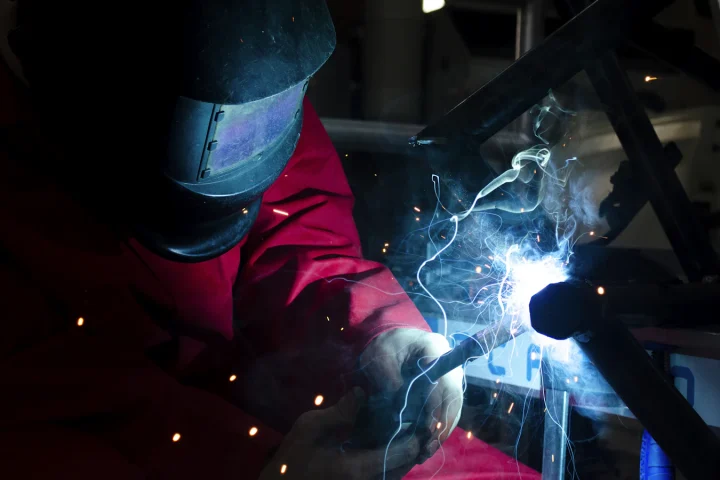
Buying advice
What Welder Should a Beginner Buy?
A beginner should usually buy a wire-feed welder: 120V flux-core for a low-cost start, or a gas-capable MIG machine for cleaner welds…
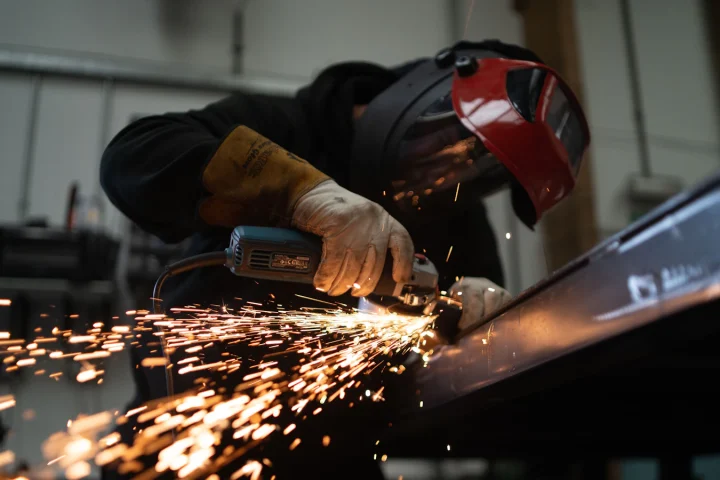
Guide
9 Common Beginner Welding Mistakes (and How to Fix Them)
Nine common beginner welding mistakes, from dirty metal and poor clamp contact to wrong settings and travel speed, with a practical fix…
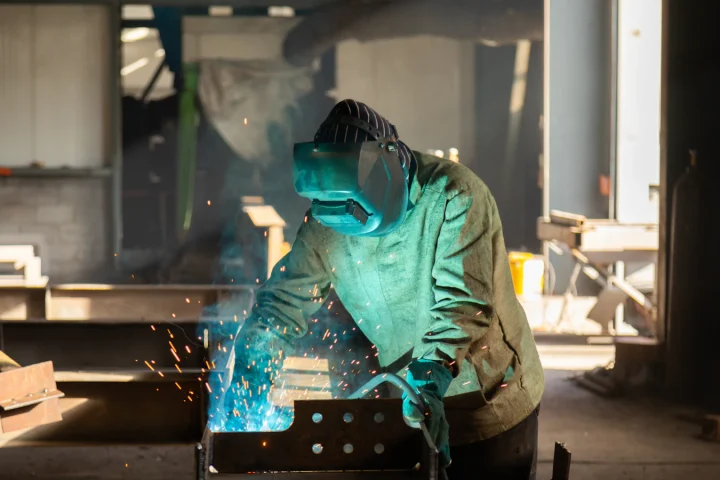
Guide
What Is Welding? How Metal Is Joined, Explained Simply
Welding joins metal by melting the edges of two pieces together, usually with added filler, so they cool into a single solid…