Welding Careers: Training, Certification and How to Get Started
Where welders work, the main training routes, how welder certification works and the skills employers look for when you are starting out.
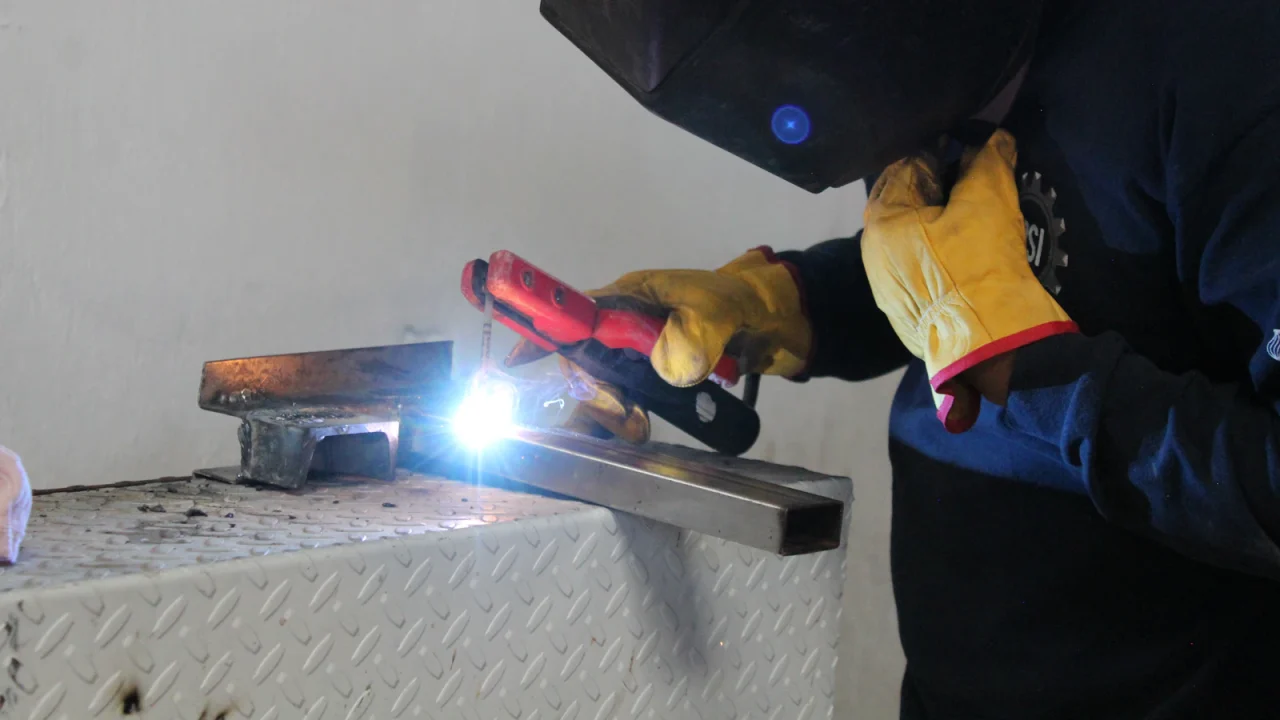
Welders join and repair metal parts in fabrication shops, on construction sites, along pipelines, in shipyards, in factories and in maintenance departments. Most people enter the trade through a school program, an apprenticeship or on-the-job training, then prove their skill by passing a welding test to a specific code.
On this page
This guide explains the common settings, the main training routes, how certification works and what employers look for in a new welder. WelderGuru does not list or advertise jobs. For openings, check local employers, unions, training programs and job boards.
What welders do and where they work
The core of the job is the same everywhere: read the drawing, prepare and fit the parts, weld them to the required standard and check the result. What changes is the material, the environment and the process. The table below gives a general picture. Individual employers vary.
| Setting | Typical work | Typical processes |
|---|---|---|
| Fabrication shops | Frames, railings, brackets, trailers, custom parts built from drawings | MIG, flux-core, stick, TIG |
| Construction and structural | Beams, columns, connections and decking on buildings and bridges | Stick, flux-core |
| Pipeline | Joining pipe sections in the field, often in all positions | Stick, TIG for root passes, some wire processes |
| Shipbuilding | Hull plates, bulkheads and structures, often in tight spaces | Flux-core, stick, MIG, submerged arc |
| Manufacturing | Repeat production of parts, sometimes running or tending robotic cells | MIG, robotic MIG, TIG |
| Maintenance and repair | Fixing equipment, machinery and plant components on site | Stick, MIG, TIG, cutting processes |
If the process names are new to you, read what welding is and the comparison of MIG vs TIG vs stick before choosing a training program.
Training routes into welding
There is no single required path. Most routes combine classroom theory with a lot of time in the booth.
- High school and community college programs. Many schools offer welding classes, certificates or associate degrees covering processes, blueprint reading and safety.
- Trade and technical schools. Focused programs that concentrate on hands-on booth time and often prepare students for certification tests.
- Apprenticeships. Paid, structured training that combines work under experienced welders with related instruction, often run by unions, employer groups or registered programs.
- On-the-job training. Some employers hire helpers or entry-level workers and train them on the processes they use, usually starting with simpler welds.
- Military. Some service branches train personnel in welding and metalworking roles, and that experience can carry into civilian work.
Compare programs by how much booth time they give you, which processes they teach and whether they help you test to a recognized code. Ask what equipment students use and how graduates usually find work.
How welder certification works
In welding, certification usually means you passed a performance qualification test. You weld a test piece, called a coupon, following a written procedure, and it is inspected or tested against the acceptance criteria of a code. Two common examples are AWS D1.1, the structural welding code for steel, and ASME Section IX, which covers welder qualification for boilers, pressure vessels and pressure piping.
Each qualification is tied to specific variables. A test passed with stick welding in the flat position on carbon steel plate does not qualify you for TIG on stainless pipe in a fixed position. Welders build up a set of qualifications over time as they test on different processes, positions, materials and thicknesses. Many qualifications also need to be kept current by showing you are still using the process.
The American Welding Society runs the AWS Certified Welder program, a performance-based credential with no required prior coursework. You test at an AWS Accredited Test Facility, and the weld is evaluated against the applicable code. Many employers also test new hires in their own shop, regardless of what certificates you bring.
Later in a career, some welders move into inspection. The AWS Certified Welding Inspector credential is one recognized path, and it requires documented experience and passing exams on codes, inspection methods and welding knowledge.
Skills employers look for
- Blueprint and weld symbol reading. You need to know what weld goes where, its size and type, and any finishing or testing notes.
- Fit-up. Cutting, beveling, tacking and squaring parts so the weld can be made to spec. Good fit-up often matters as much as the weld itself.
- Several processes. Being able to run stick, MIG, flux-core and TIG makes you useful in more shops. The stick welding basics and TIG welding basics guides are a good start.
- Measuring and layout. Tape measures, squares, levels and simple math for cutting and fitting parts accurately.
- Cutting. Using grinders, plasma and oxy-fuel equipment safely.
- Safety habits. Correct PPE, fume control, fire watch awareness and housekeeping. Review the welding safety basics until they are second nature.
- Reliability. Showing up on time, following procedures and asking questions when a drawing is unclear.
Building experience and a practice portfolio
Practice with a purpose. Run beads and joints on plate, then work through T-joints, lap joints and groove welds in the flat, horizontal, vertical and overhead positions. Cut some of your practice welds open or bend them to see whether they fused all the way through, which is how many qualification tests are judged.
Keep a simple portfolio. Label your best coupons with the process, position, material and thickness, and photograph them with notes on the settings you used. Add finished projects that show fit-up and layout skill. The beginner welding projects list has ideas, and the start here learning path sets out what to study in order.
Pay and job outlook
Pay varies widely with region, industry, process skills, certifications and overtime. According to the U.S. Bureau of Labor Statistics Occupational Outlook Handbook, the median pay for welders, cutters, solderers and brazers was $53,750 per year ($25.84 per hour) in 2025, and employment is projected to grow 2 percent from 2025 to 2035, which BLS describes as slower than average. Check the BLS Occupational Outlook Handbook for current figures and state-level data.
Frequently asked questions
Do I need a certification to get a welding job?
Is a welding certification valid everywhere?
Which welding process should I learn first for a career?
Can I practice at home before starting a program?
Sources and further reading
Keep reading
Related guides
Repair guide
How to Fix an Exhaust Pipe Without Welding: Clamps, Wraps and Sleeves
Small exhaust leaks can be patched with wraps, putty, clamps or sleeves. Learn which fix lasts, how to do it safely and…
Workshop guide
How to Use an Angle Grinder to Cut Metal Safely
Cut metal with an angle grinder safely: choose the right disc, keep the guard on, secure the work, control sparks and avoid…

Repair guide
How to Weld Cast Iron: Preheat, Rods and Avoiding Cracks
Cast iron can be welded with nickel stick rods or brazed, if you control heat. Learn when to repair a casting, how…