12 Beginner Welding Projects That Build Real Skills
Twelve non-structural beginner welding projects, from a welded cube to a small table, with the skill each one teaches and the process that suits it.
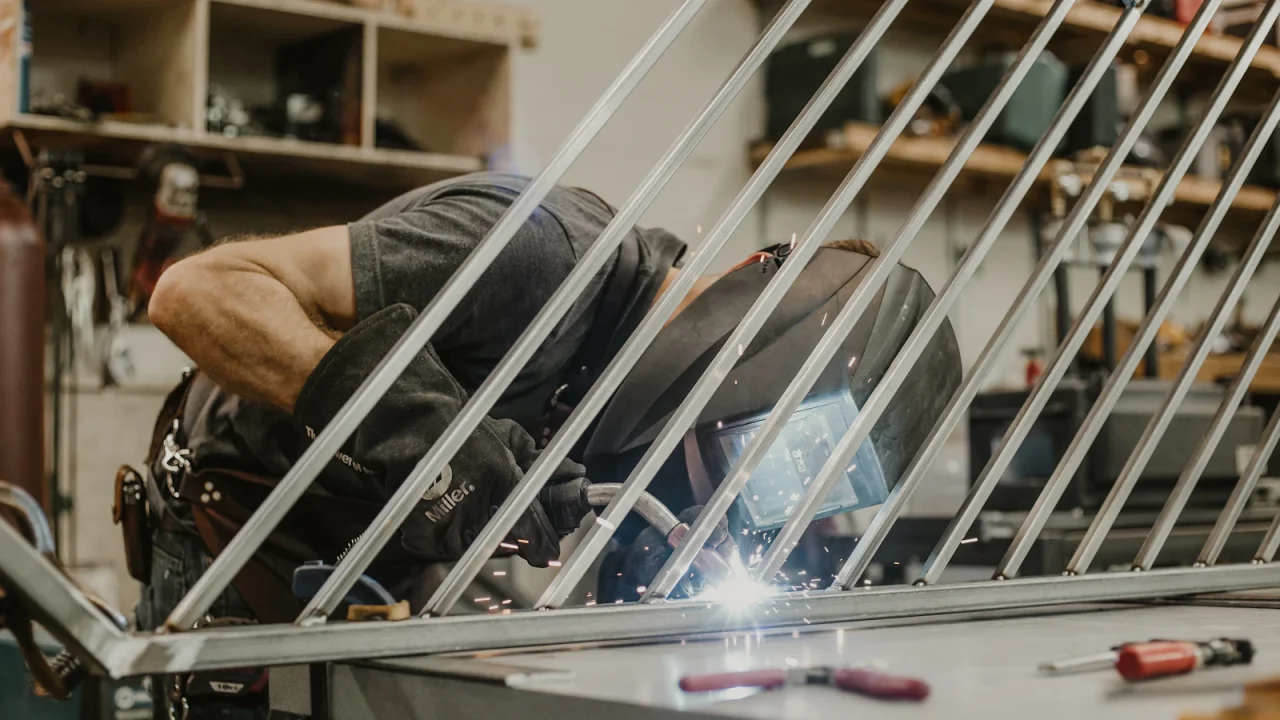
The best first welding projects are small, made from mild steel, and forgiving if a weld turns out ugly. Nothing on this list carries people, vehicles or heavy loads. The twelve projects run roughly from easiest to hardest, and each one is here because it drills a specific skill: cutting square, tacking, controlling distortion or welding thin tube.
On this page
Any common hobby process works for most of them. MIG and flux-core get you to usable results fastest, stick suits the thicker pieces, and TIG suits the small decorative ones once you have the basics.
Before you start: material, tools and prep
Buy new mild steel rather than guessing at scrap. Flat bar, angle and square tube around 1/8 inch thick are forgiving: thick enough to resist burn-through, thin enough for a small machine. Avoid galvanized, plated or painted stock, and never weld on anything that has held fuel or chemicals.
Beyond the welder you need an angle grinder with cutoff and flap discs, a speed square, a tape measure, soapstone, and a few clamps and magnets. Clean every joint to bright metal, tack the parts, check them for square, and only then weld. Set up your space using the home welding area guide and wear everything on the PPE checklist, including eye and face protection for grinding.
Projects 1 to 4: first joints
1. Welded cube
- What you practice: tacking six squares of 1/8 inch plate into a cube, then welding twelve outside-corner joints. It teaches fit-up and consistent beads.
- Difficulty: easy.
- Process: any. A good first MIG or flux-core job.
2. Steel bookends
- What you practice: joining a base and an upright at 90 degrees with fillet welds, then checking whether the joint stayed square as it cooled.
- Difficulty: easy.
- Process: MIG, flux-core or stick.
3. Desk caddy from tube offcuts
- What you practice: welding short lengths of tube upright on a plate base. You learn to weld around a shape and to aim heat at the thicker part.
- Difficulty: easy.
- Process: MIG or TIG. Flux-core works on thicker-wall tube.
4. Wall hook rail
- What you practice: bending flat bar into hooks in a vise, spacing them evenly on a backing bar and repeating the same small weld. Keep it for coats or light hand tools.
- Difficulty: easy.
- Process: any.
Projects 5 to 8: frames and squareness
5. Boot scraper
- What you practice: laying out parallel bars at even spacing inside a frame. Many short welds give a first look at how heat pulls flat work out of shape.
- Difficulty: easy to moderate.
- Process: flux-core, stick or MIG.
6. Flat-bar picture frame
- What you practice: cutting accurate 45-degree miters, measuring diagonals after tacking, and grinding welds flush for a clean finish.
- Difficulty: moderate.
- Process: MIG or TIG.
7. Plant stand
- What you practice: fitting three or four legs to a ring or square top so it sits without rocking. It is for a potted plant, not for standing or sitting on.
- Difficulty: moderate.
- Process: MIG, flux-core or stick.
8. Fireside log holder
- What you practice: building two matching side frames from square tube and joining them into a low cradle. You weld around tube corners and keep parts identical.
- Difficulty: moderate.
- Process: MIG, flux-core or stick.
Projects 9 to 12: thin stock, tube frames and a capstone
9. Garden trellis
- What you practice: welding a grid of 1/4 inch round rod. Small joints demand short welds and good heat control across a larger layout.
- Difficulty: moderate.
- Process: MIG or flux-core, or stick with small rods.
10. Small steel sculpture
- What you practice: joining offcuts of different shapes and thicknesses without a jig. Use plain uncoated steel only, because zinc-plated hardware gives off hazardous fume.
- Difficulty: moderate.
- Process: any. A natural fit for TIG.
11. Side table frame
- What you practice: keeping a three-dimensional frame of 1 inch square tube square, welding thin wall without burn-through, and leveling four legs. A wooden top goes on afterward.
- Difficulty: moderate to hard.
- Process: MIG or TIG. Flux-core is harder on thin-wall tube.
12. Small welding table
- What you practice: everything above at a larger scale: a cut list, a squared frame and a plate top attached without warping it. Follow the guide to building a simple welding table.
- Difficulty: the hardest of the twelve.
- Process: MIG, flux-core or stick.
What to leave off the list
Trailers, hitches and towing parts, vehicle ramps, jack stands, lifting and rigging gear, vehicle frames and suspension parts, and anything that holds pressure or fuel are not beginner projects. A failed weld on any of them can injure someone. That work needs an engineered design, qualified welding procedures and inspection. Apply the same caution to anything a person will stand on, sit on or hang from.
Getting more skill from each build
- Tack first. Tack every joint, measure the diagonals, adjust, and only then weld.
- Spread the heat. Alternate sides and corners so one area does not shrink and pull the whole part.
- Test a spare joint. Weld a sample from the same material, cut through it or break it in a vise, and look for fusion at the root.
- Keep notes. Record settings that worked, and start from your machine’s chart each time.
If the same fault keeps appearing, check it against common beginner welding mistakes. If you have not bought a machine yet, the guide to choosing a beginner welder matches machine types to this kind of work.
Frequently asked questions
What thickness of steel is easiest to learn on?
Can I use scrap metal for practice?
Which welding process is best for these projects?
How do I keep a frame square while welding?
Sources and further reading
Keep reading
Related guides
Project
How to Build a Simple Welding Table: Planning, Materials and Steps
Plan and build a simple steel welding table: choose the size, top thickness and frame layout, then cut, tack, square and weld…
Material guide
How to Weld Aluminum: Processes, Prep and Common Problems
Aluminum needs AC TIG or MIG with a spool gun, pure argon and careful cleaning. This guide covers prep, filler choice, technique…
Buying advice
What Welder Should a Beginner Buy?
A beginner should usually buy a wire-feed welder: 120V flux-core for a low-cost start, or a gas-capable MIG machine for cleaner welds…