Oxy-Fuel Welding and Cutting Basics: Equipment, Flames and Safety
What an oxy-fuel torch is good for, the equipment involved, acetylene vs propane, the three flame types and the safety rules that matter.
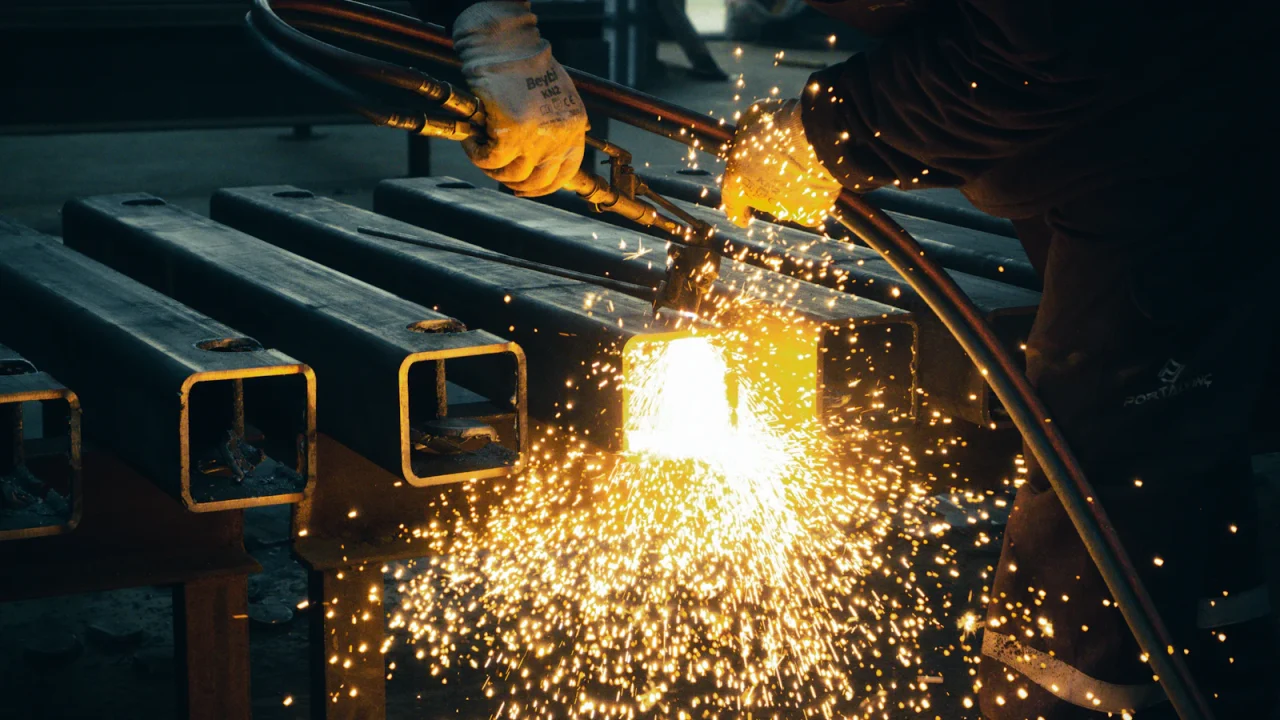
Oxy-fuel equipment burns a fuel gas, usually acetylene or propane, with pure oxygen to make a flame hot enough to melt steel. With a welding tip the flame joins metal. With a cutting attachment, a separate jet of oxygen burns through hot carbon steel. The same outfit also heats, bends and brazes, and it needs no electricity.
On this page
This guide explains how the equipment and flames work. It is not a substitute for training. Get hands-on instruction from a qualified person and follow the equipment manufacturer’s instructions before you light a torch.
What oxy-fuel is still good for
- Cutting carbon steel, including sections far thicker than a home plasma cutter can manage.
- Heating and bending bar, plate and tube, and freeing seized fasteners.
- Brazing, which joins metals with a filler that melts below the melting point of the base metal.
- Welding thin steel. Gas welding is slow and puts a lot of heat into the part, so for most joints MIG or TIG is faster and distorts the metal less.
For most hobby work in mild steel, a torch works alongside an arc welder as a cutting and heating tool.
The equipment
- Oxygen cylinder: high-pressure gas with right-hand threaded connections.
- Fuel cylinder: acetylene or propane. Fuel connections use left-hand threads, marked with a notch on the nut, so the two gases cannot be swapped by accident.
- Regulators: one per cylinder, specific to the gas. Each reduces cylinder pressure to a steady working pressure.
- Hoses: green for oxygen and red for fuel in the United States. The hose grade must suit the fuel.
- Torch and attachments: the handle has two valves that control the gases. A welding or heating tip mixes them into one flame. A cutting attachment adds a lever that releases a separate stream of cutting oxygen.
- Tips: sized for the metal thickness and made for a particular fuel. The maker’s tip chart gives the size and pressures.
- Check valves and flashback arrestors: a check valve stops gas flowing backward into the wrong hose. A flashback arrestor is designed to stop a flame traveling back toward the regulator and cylinder. Use what the equipment maker specifies.
Acetylene vs propane
| Factor | Acetylene | Propane |
|---|---|---|
| Flame | Hottest common fuel, heat concentrated at the inner cone | Cooler, with more heat in the outer flame |
| Fusion welding steel | Yes | Not suitable |
| Cutting carbon steel | Yes, with fast preheat | Yes, with slower preheat |
| Heating and brazing | Yes | Yes, and well suited to large areas |
| Working pressure | Must not exceed 15 psi | Set from the tip chart |
| Cylinder | Gas dissolved in a solvent. Keep upright and respect the withdrawal rate limit. | Liquefied gas. Keep upright. |
| Equipment | Acetylene regulator, hose and tips | Propane-rated regulator, hose and tips |
The two fuels are not interchangeable on the same tips, and often not on the same hoses or regulators. Check the torch maker’s documentation before changing fuel.
The three flame types
Once the fuel is lit, adding oxygen changes the shape and chemistry of the flame. With acetylene there are three recognizable settings:
| Flame | Gas balance | How it looks | Typical use |
|---|---|---|---|
| Carburizing (reducing) | Excess fuel | A pale feather extends beyond the inner cone | Some brazing and hardfacing. Adds carbon to molten steel. |
| Neutral | Fuel and oxygen in balance | A sharp, clearly defined inner cone with no feather | Most steel welding and cutting preheat |
| Oxidizing | Excess oxygen | A shorter, pointed cone and a harsher hiss | Limited uses, such as some braze welding. Burns and weakens steel welds. |
Why oxy-fuel only cuts carbon steel
An oxy-fuel cut is a chemical reaction more than a melting process. The preheat flames bring a spot on the steel up to its ignition temperature, a bright red heat below its melting point. A jet of pure oxygen then makes the hot iron burn rapidly into iron oxide. That oxide, called slag, melts at a lower temperature than the surrounding steel, so the jet blows it out and exposes fresh steel to keep the reaction going.
Stainless steel and aluminum break that chain. They form oxides that melt at a higher temperature than the metal underneath, so the oxide stays put and blocks the oxygen. For those metals, use plasma cutting, a saw or an abrasive disc.
A cut in general terms
This outline describes what happens during a cut. It is not a procedure. Pressures, tip sizes and the order of operations come from your equipment maker’s instructions and your instructor.
- A cutting tip is chosen for the steel thickness and both regulators are set from the maker’s chart.
- The torch is lit and the preheat flames are adjusted to neutral.
- The preheat flames are held just above the edge of the steel until a spot glows bright red.
- Pressing the cutting lever releases the oxygen jet, which burns through the plate and throws sparks and slag out of the far side.
- The torch moves along the line at a steady pace. Too fast loses the cut. Too slow melts the top edge and leaves heavy slag.
Safety comes first with oxy-fuel
Oxy-fuel accidents tend to be severe: cylinder fires, flashbacks and explosions. These points summarize widely published rules. They are not a complete list and do not replace hands-on training or your equipment’s manual.
- Get qualified instruction. A community college, trade school or gas supplier course is the right way to learn setup, lighting, shutdown and what to do when something goes wrong.
- Secure cylinders upright. Chain or strap them to a cart, wall or post so they cannot fall, and keep valve caps on cylinders that are stored or being moved.
- Keep oil and grease away from oxygen. Never lubricate oxygen fittings or regulators or handle them with oily hands or gloves. Oil can ignite violently in pure oxygen.
- Never exceed 15 psi acetylene working pressure. Above that, acetylene becomes unstable and can decompose explosively.
- Leak-check every connection with an approved leak-detection solution each time you set up or change a cylinder. Never test with a flame.
- Light and shut down in the order the equipment maker specifies, using a friction striker, never a cigarette lighter or matches.
- Wear the right eye protection. Gas welding and cutting call for filter lenses in the shade 3 to 6 range, depending on the job. See the welding helmet shade guide.
- Dress for sparks and slag in flame-resistant clothing, leather gloves and leather boots from the welding PPE checklist.
- Control the fire risk. Cutting sparks travel a long way. Clear combustibles, keep an extinguisher close and check the area afterward. See setting up a home welding area and welding safety basics.
- Never cut or heat containers. A tank, drum or closed vessel that has held fuel or other flammable material can explode even when it looks empty.
Frequently asked questions
Can you cut stainless steel or aluminum with an oxy-fuel torch?
Is propane a good alternative to acetylene?
Why is acetylene limited to 15 psi?
Can I teach myself oxy-fuel welding and cutting?
Sources and further reading
Keep reading
Related guides
Material guide
How to Weld Aluminum: Processes, Prep and Common Problems
Aluminum needs AC TIG or MIG with a spool gun, pure argon and careful cleaning. This guide covers prep, filler choice, technique…
Buying advice
What Welder Should a Beginner Buy?
A beginner should usually buy a wire-feed welder: 120V flux-core for a low-cost start, or a gas-capable MIG machine for cleaner welds…
Material guide
How to Weld Mild Steel: The Beginner’s Material Guide
Mild steel is the easiest metal to learn welding on. This guide covers prep, process choice, wire and rod selection, fit-up, distortion…