How to Use an Angle Grinder to Cut Metal Safely
Cut metal with an angle grinder safely: choose the right disc, keep the guard on, secure the work, control sparks and avoid kickback.
WelderGuru is reader-supported. As an Amazon Associate we earn from qualifying purchases made through links on this page, at no extra cost to you. Learn more.
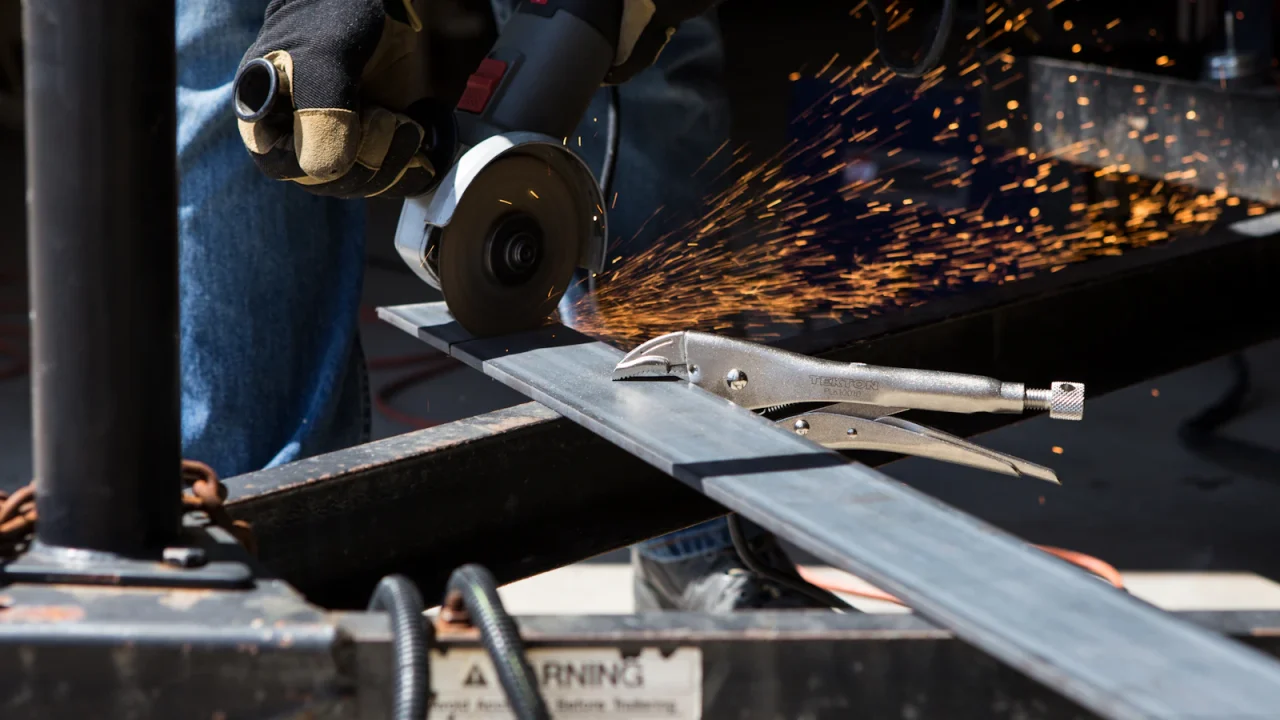
An angle grinder with a thin cut-off wheel is one of the most useful cutting tools in a home metal shop. It cuts sheet, tube, angle, rebar and bolts quickly, and the same tool handles weld prep and cleanup with a different disc.
On this page
It is also one of the easiest shop tools to get hurt with. The disc spins at very high speed, throws hot sparks, and can kick back hard if it binds. Using the right disc, keeping the guard and handle on, holding the work firmly and controlling the sparks prevents most of those injuries.
Choosing the right disc
Discs look similar but are built for very different loads. A cut-off wheel is thin so it can slice through metal, which means it cannot take sideways pressure. A grinding disc is thick and built for side pressure, so it is clumsy and dangerous when forced into a deep cut.
| Disc type | Use it for | Do not use it for | Notes |
|---|---|---|---|
| Thin cut-off wheel | Straight cuts in sheet, tube, angle, rod and bolts | Side grinding or curved cuts | Typically around 1/16 inch thick or thinner; fast, with a narrow kerf |
| Grinding disc | Heavy stock removal and beveling weld joints | Cutting | Thick, usually depressed center; used at a shallow angle |
| Flap disc | Blending welds, smoothing edges, light shaping | Cutting | Smoother finish than a grinding disc; grits from coarse to fine |
| Diamond blade | Masonry, tile and stone | Most steel, unless rated for metal | Metal-rated diamond blades exist; check the label |
Before fitting any disc, read its label. The maximum RPM marked on the disc must be higher than the no-load speed on the grinder’s nameplate. The disc diameter must also match the grinder and its guard, so never fit a larger disc than the grinder is designed for. Throw away any disc that is cracked, chipped, dropped or past the expiry date some makers print on it.
Type to look for
Thin cut-off wheels
Why consider it
- Match the diameter and arbor size to your grinder and guard.
- Confirm the maximum RPM on the label exceeds your grinder's rated speed.
- Choose wheels marked for steel, or for stainless if you cut it, so you do not contaminate stainless with iron.
Best for: Straight cuts in steel stock with a 4-1/2 inch angle grinder
Search cut-off wheels (opens Amazon in a new tab)
Type-level recommendation. Compare current models, specifications and prices on Amazon. We may earn a commission.
Guard, handle and PPE
The guard sits between you and the disc, and it is what stops pieces of a broken wheel from hitting you. Keep it fitted, tight, and turned so it covers the side of the disc facing you. Use a guard suited to the disc you are running, as described in the grinder manual. Never run a grinder without its guard.
Fit the side handle every time. Two hands on the tool give you far more control if the disc catches. Unplug the grinder or remove its battery whenever you change discs.
Wear this gear every time you cut:
- Safety glasses with a face shield over them. The shield stops sparks and fragments, and the glasses still protect you when the shield is up.
- Hearing protection. Grinders are loud enough to damage hearing over time.
- Gloves. Leather welding gloves work well. Avoid loose fabric gloves that can catch on the disc.
- Close-fitting clothing. No loose sleeves, hanging cords or drawstrings. Cotton or wool resists sparks better than synthetics.
- A respirator when cutting coated, painted or galvanized metal, or working in a closed space.
The welding PPE checklist and the welding gloves guide cover this gear in more detail.
Securing the work
Never hold the workpiece in one hand while cutting with the other. Clamp it in a bench vise or to a sturdy table with C-clamps or locking pliers, with the cut line just beyond the edge of the support. A solid surface such as a steel welding table is ideal.
Think about where the offcut will go. Support long pieces on both sides so the cut does not close up and pinch the disc, and let small offcuts fall free rather than trapping them between clamps.
Cutting technique
- Mark the line with a scribe or marker, and plan to cut on the waste side so the finished piece stays to size.
- Check where the sparks will go. Stand so the spark stream points down and away from you, other people, and anything that can burn.
- Start the grinder off the work and let it reach full speed before touching the metal.
- Let the disc do the work. Use light, steady pressure. Forcing it heats the disc, slows the cut and raises the risk of a break.
- Keep the disc in line with the cut. Do not twist, tilt or steer it once it is in the kerf. Cut-off wheels are not built to turn corners.
- Ease off as you break through, and let the disc stop before setting the grinder down.
Cutting different stock
- Sheet metal: clamp it close to the cut line to stop vibration, and cut with a shallow angle and light pressure.
- Square and round tube: cut one face at a time, rotating the tube in the vise, rather than forcing the disc through the whole section at once.
- Angle iron: cut the edge of one leg first, then work across, so the disc is not plunging into the thick corner.
- Rebar and solid rod: support both sides of the cut and work around the bar if the diameter is larger than the disc can reach comfortably.
- Bolts and threaded rod: clamp securely, and thread a nut on before cutting so you can back it off to clean up the threads.
For long straight cuts in sheet or thick plate, a plasma cutter is often faster and cleaner.
Kickback, sparks and fire risk
Kickback happens when the disc catches or pinches and the grinder jerks back toward you. The common causes are a cut that closes on the disc, twisting the disc in the kerf, forcing the cut, a worn or wrong disc, and starting the cut with the disc already touching the metal. Keep both hands on the tool and never stand in line with the disc.
Sparks travel many feet and can smolder unseen in sawdust, rags or cardboard. Clear flammables from the area, keep a fire extinguisher within reach, and stay or keep a fire watch for at least 30 minutes after cutting. Never cut containers that have held fuel or chemicals. The home welding area setup guide covers fire-safe layout, and welding safety basics covers wider shop hazards.
After the cut
The cut edge and the disc are both hot. Handle the piece with gloves or pliers, and set it on a non-flammable surface to cool. Remove the sharp burr with a flap disc or file before fitting it up for welding.
Frequently asked questions
Can I cut metal with a grinding disc?
Can I remove the guard to fit a bigger disc or reach a tight spot?
What causes a cut-off wheel to shatter?
Which way should the sparks go?
Sources and further reading
Keep reading
Related guides
Repair guide
How to Fix an Exhaust Pipe Without Welding: Clamps, Wraps and Sleeves
Small exhaust leaks can be patched with wraps, putty, clamps or sleeves. Learn which fix lasts, how to do it safely and…
Repair guide
How to Weld Cast Iron: Preheat, Rods and Avoiding Cracks
Cast iron can be welded with nickel stick rods or brazed, if you control heat. Learn when to repair a casting, how…
Careers
Welding Careers: Training, Certification and How to Get Started
Where welders work, the main training routes, how welder certification works and the skills employers look for when you are starting out.