Buying guide
Flux-Core Welder Buying Guide: Gasless Machines Explained
How to choose a flux-core welder: gasless-only versus gas-capable machines, amperage, duty cycle, drive system and running costs.
WelderGuru is reader-supported. As an Amazon Associate we earn from qualifying purchases made through links on this page, at no extra cost to you. Learn more.
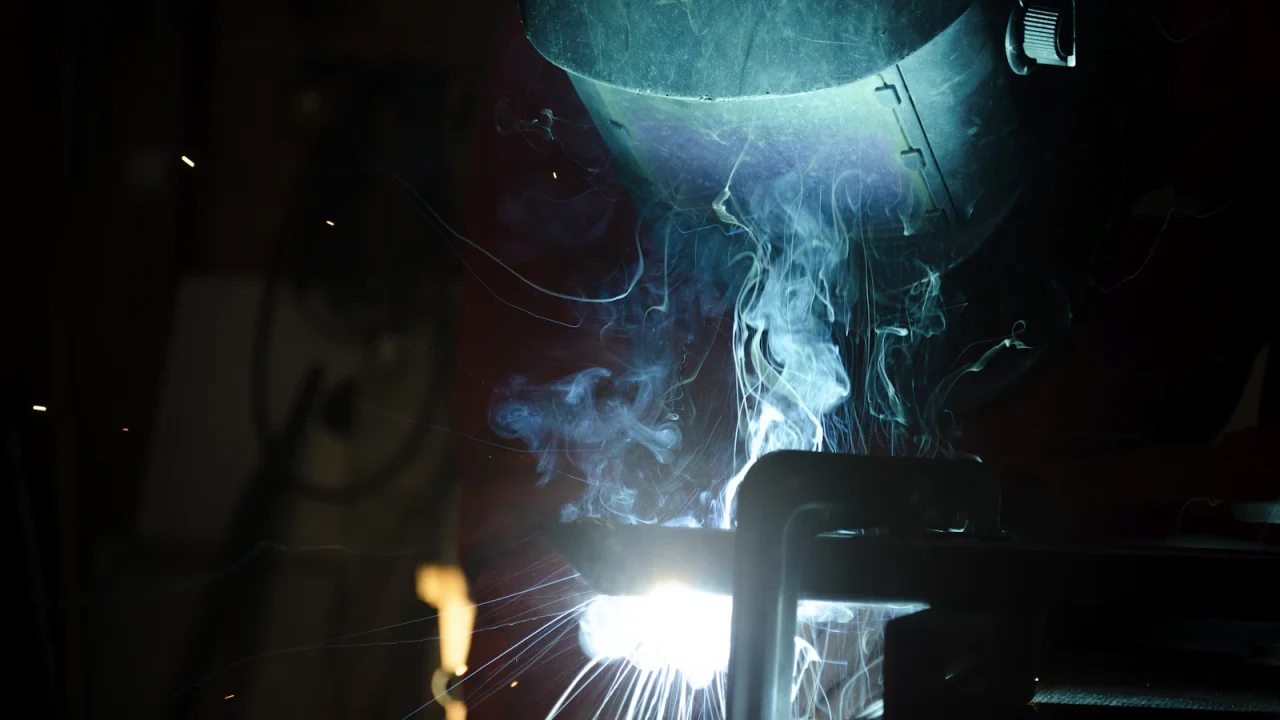
A flux-core welder suits the buyer who wants the lowest-cost way to start welding mild steel, or who works outdoors where wind would blow shielding gas away. The wire carries flux in its core that shields the weld, so there is no cylinder or regulator to buy.
On this page
The decision that matters most is whether to buy a flux-core-only machine or a gas-capable MIG machine that also runs flux-core wire. A flux-core-only machine has no gas solenoid and usually no way to change polarity, so it cannot be converted to MIG later. If you may want cleaner welds on thin steel one day, buy the gas-capable machine now.
Who a flux-core welder suits, and who should look elsewhere
Flux-core fits occasional repairs and outdoor jobs on mild steel: gates, brackets, mower decks and garden equipment. It uses the same gun and trigger as MIG, so it is quick to pick up. Flux-core welding basics covers setup and technique.
Look elsewhere for auto-body panels and other thin sheet, where the hotter arc burns through, and for work where appearance matters, because every weld needs slag chipped and spatter cleaned off. A gas-shielded MIG welder is better for both, and MIG vs flux-core sets out the differences. For regular work on steel over 1/4 inch, compare a 240V machine or a stick welder. Trailer frames, vehicle chassis and anything structural need qualified procedures, whatever the machine.
Self-shielded wire also makes more fume than solid wire, so weld outdoors or with good ventilation. Welding safety basics covers fume control.
Flux-core welder types compared
| Type | Best for | Process | Power | Key feature | Check price |
|---|---|---|---|---|---|
| 120V flux-core only | Lowest-cost start and occasional repairs | Self-shielded flux-core | 120V; many call for a dedicated 20 A circuit | No gas hardware; cannot be converted to MIG | See on Amazon (opens Amazon in a new tab) |
| 120V gas-capable MIG | Flux-core now, MIG later | Flux-core and MIG | 120V | Gas solenoid and polarity change built in | See on Amazon (opens Amazon in a new tab) |
| Dual-voltage MIG | Flux-core on thicker steel | Flux-core and MIG | 120V or 240V, with reduced output on 120V | More output on 240V for larger wire and thicker material | See on Amazon (opens Amazon in a new tab) |
| Flux-core and stick combo | A portable repair kit | Flux-core, stick and sometimes lift TIG | 120V or dual-voltage | Two gasless processes in one light inverter | See on Amazon (opens Amazon in a new tab) |
| Multi-process | Every process from one machine | MIG, flux-core, stick and lift TIG | Usually dual-voltage | Gas-capable, with stick and basic TIG as well | See on Amazon (opens Amazon in a new tab) |
These are typical characteristics for each type. Confirm gas capability, output and capacity on the product listing and in the manual. The 120V welders guide covers what a household outlet can support.
Specifications that matter on a flux-core welder
- Amperage range. A rough rule is 1 amp per .001 inch of steel, so 1/8 inch needs about 125 A. 120V machines typically top out between about 90 and 140 A, which is why roughly 3/16 inch is the usual single-pass limit. Larger claims normally assume several passes.
- Duty cycle. The percentage of a 10-minute period you can weld at a stated amperage: 30% at 90 A means 3 minutes of welding and 7 minutes of cooling. Compare machines at the same amperage.
- Output and polarity. Self-shielded wire runs on DC electrode negative. Check that the output is DC, and on a gas-capable machine check how polarity is changed.
- Drive system. Flux-core wire is tubular and soft, so it needs a knurled drive roll and moderate tension. Confirm a knurled roll is included, and prefer a metal drive assembly.
- Wire and spool size. .030-inch wire suits thinner steel and .035-inch suits general work. Check whether the machine takes 8-inch spools as well as 4-inch.
- Controls. Separate, continuously adjustable voltage and wire speed give more control than a two-position switch.
- Gun, clamp and support. The cheapest machines often have a fixed gun that is harder to replace. Check that contact tips are a common type, and compare warranty terms.
Best for beginners
120V flux-core welder
Why consider it
- Runs self-shielded wire, so no cylinder, regulator or gas refills
- Plugs into a 120V outlet and is light enough to carry to the job
- Flux-core-only models cannot be converted to gas-shielded MIG
Best for: Occasional repairs on mild steel at the lowest outlay, with no gas cylinder to buy
Check price on Amazon (opens Amazon in a new tab)
Type-level recommendation. Compare current models, specifications and prices on Amazon. We may earn a commission.
Best for room to grow
Gas-capable 120V MIG welder
Why consider it
- Runs flux-core wire today and solid wire with gas when you add a cylinder
- Has a gas solenoid and a polarity change for both processes
- A regulator and solid-wire drive roll may or may not be included
Best for: Buyers starting gasless who want the option of gas-shielded MIG later
Check price on Amazon (opens Amazon in a new tab)
Type-level recommendation. Compare current models, specifications and prices on Amazon. We may earn a commission.
Best for mobile repairs
Flux-core and stick combo welder
Why consider it
- Two gasless processes that both work outdoors
- Usually a compact inverter that is easy to carry
- Stick mode adds capability on thicker or dirtier steel
Best for: Repairs away from the workshop where carrying a gas cylinder is impractical
Check price on Amazon (opens Amazon in a new tab)
Type-level recommendation. Compare current models, specifications and prices on Amazon. We may earn a commission.
Other kit and running costs
With no gas, the running costs are wire, contact tips and nozzles. Self-shielded wire costs more per pound than solid MIG wire, but there is no cylinder to buy or refill. Tips and nozzles clog with spatter and need regular replacement; spatter causes and fixes explains how to reduce it.
Add a chipping hammer, a wire brush and an angle grinder for cleanup, plus a welding helmet, gloves and a jacket that stands up to spatter.
Common buying mistakes
- Buying a flux-core-only machine and later wanting MIG.
- Taking the thickness claim on the box at face value. Look for the single-pass figure and the amperage behind it.
- Planning to run the machine on a shared circuit or a long, light extension cord, which reduces output. Use a qualified electrician if you need a new circuit.
- Buying for indoor use without a plan for ventilation.
Frequently asked questions
Can a flux-core welder be converted to MIG?
How thick can a 120V flux-core welder weld?
Can I use a flux-core welder indoors?
Is a flux-core welder good for a beginner?
Sources and further reading
Related gear on Amazon
Shortcuts to current Amazon listings for the items mentioned in this guide. These are affiliate links.
Tools that help with this decision
- Welder Match Quiz — Ten quick questions that match you to a type of welder.
- Amperage Calculator — Estimate the amperage range for your material and process.
- Power Compatibility Checker — Verify voltage, breaker, and outlet before buying.
- Setup Generator — Build a safety-first setup checklist.