Buying guide
Portable Welder Buying Guide: Lightweight Machines for Mobile Repairs
How to choose a portable welder: weight, input power, generator compatibility, duty cycle and the machine types that suit repairs away from the shop.
WelderGuru is reader-supported. As an Amazon Associate we earn from qualifying purchases made through links on this page, at no extra cost to you. Learn more.
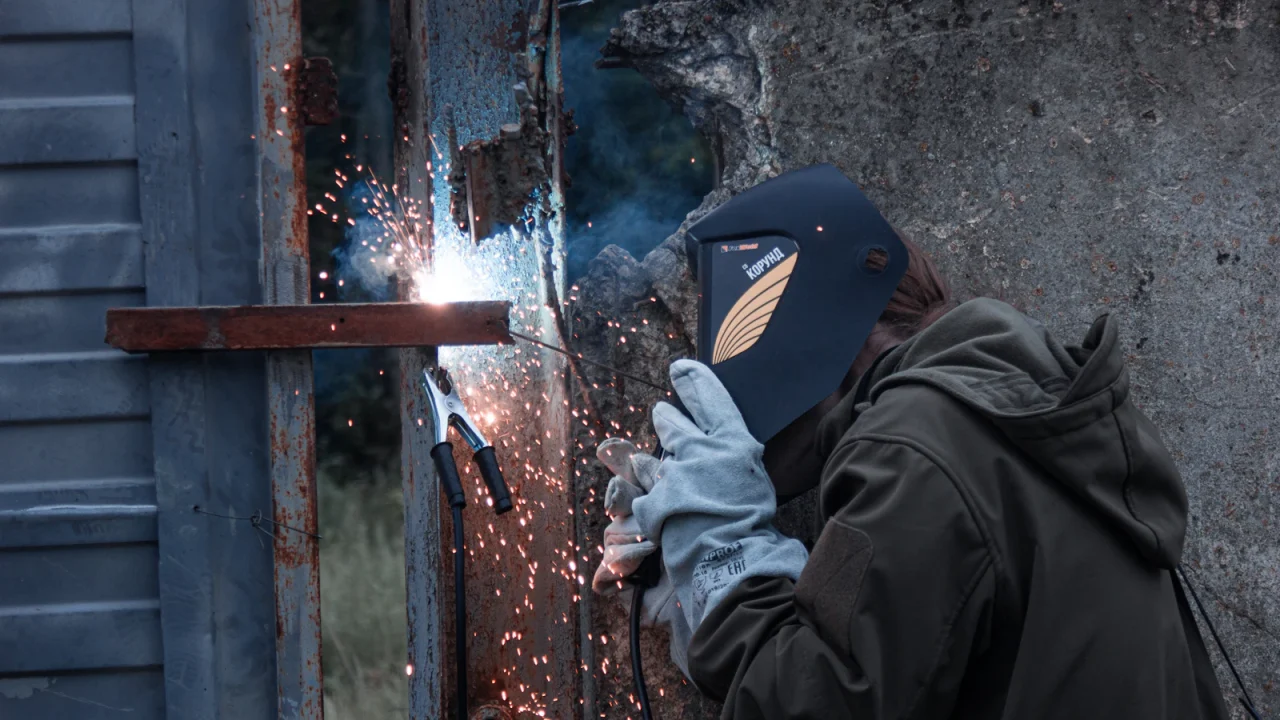
A portable welder suits you if the machine goes to the work instead of the work coming to the bench: a sagging gate, a cracked bracket on a mower deck, a fence at the far end of the property, or a job in a friend’s garage.
On this page
The decision that matters most is how you will power it where the work is. A wall outlet, a generator and no power at all each point to a different type of machine, and that choice matters more than a few pounds of weight.
Who this suits (and who should look elsewhere)
Portable machines fit property owners, hobby farmers and anyone doing occasional mobile repairs on mild steel.
If the welder will stay in one place, weight is the wrong thing to pay for, and the best welders overview is a better starting point. If most of your work is thin sheet indoors, a gas-shielded MIG welder on a cart will serve you better. Portability also does not widen what is safe to repair in the field: structural members, lifting gear, vehicle frames, pressure vessels and fuel tanks need qualified procedures.
Portable welder types compared
| Type | Best for | Process | Power | Key feature | Check price |
|---|---|---|---|---|---|
| Inverter stick welder | Outdoor repairs on thicker or less-than-clean steel | Stick, some with lift TIG | 120V or dual voltage | Often well under 20 lb | See on Amazon (opens Amazon in a new tab) |
| Compact 120V flux-core welder | Light repairs with no gas to carry | Flux-core | 120V | Wire-feed ease without a cylinder | See on Amazon (opens Amazon in a new tab) |
| Compact dual-voltage MIG welder | Mixed indoor and outdoor work | MIG and flux-core | 120V/240V | Runs gas-shielded or gasless wire | See on Amazon (opens Amazon in a new tab) |
| Compact multi-process welder | One machine for varied site work | MIG, flux-core, stick, lift TIG | 120V/240V | Several processes in one case | See on Amazon (opens Amazon in a new tab) |
| Engine-driven welder | Sites with no electrical power | Mostly stick, some multi-process | Gasoline or diesel engine | Generates its own power, moved by truck or trailer | See on Amazon (opens Amazon in a new tab) |
The specifications that matter for portable use
Weight and what you actually carry
The listed weight is usually the power source alone. Add the leads, electrode holder and ground clamp, and for wire-feed machines a spool of wire. Gas-shielded MIG or TIG adds a cylinder and regulator, which is why gasless processes dominate mobile work. Look for a solid handle or strap, and check lead length, since longer leads let the machine stay near the outlet.
Input voltage
Dual voltage is worth more on a portable machine than anywhere else, because you rarely choose the outlet. On 120V, many welders call for a dedicated 20 A circuit and deliver reduced output. Long or thin extension cords cause voltage drop, so follow the manual’s guidance on cords. The 120V vs 240V comparison explains what you give up on household power.
Generator compatibility
Not every welder runs well on every generator. The generator’s continuous output must sit well above the welder’s rated input, and the power must be clean enough for inverter electronics. Manuals usually state a minimum generator size, and some advise against generator use altogether. Read that section before you buy either machine.
Amperage, duty cycle and consumables
Match output to the steel you expect to repair. For wire-feed machines the rough rule is 1 amp per .001 inch of thickness, and a 120V machine tops out around 140 A. For stick, the electrode packaging gives the amperage range for each rod diameter. Small machines often have short duty cycles near maximum output: 30% at 90 A means 3 minutes of welding in every 10. The duty cycle calculator shows the weld and rest time. Stick electrodes and common flux-core wire are widely sold. Every figure here is typical for the type, so confirm it on the product listing and in the manual.
Three types worth shortlisting
Lightest option
Dual-voltage inverter stick welder
Why consider it
- Often well under 20 lb, with no wire feeder or gas cylinder to carry
- Stick tolerates wind and less-than-clean steel
- Many models run on both 120V and 240V, with reduced output on 120V
Best for: Outdoor repairs on thicker, rusty or wind-exposed steel
Check price on Amazon (opens Amazon in a new tab)
Type-level recommendation. Compare current models, specifications and prices on Amazon. We may earn a commission.
Easiest to use
Compact 120V flux-core welder
Why consider it
- Wire-feed operation is easier to learn than stick
- Self-shielded wire needs no gas and works outdoors
- Output is limited to roughly 140 A or less, with more spatter and slag than MIG
Best for: Light repairs on thin to moderate mild steel near a household outlet
Check price on Amazon (opens Amazon in a new tab)
Type-level recommendation. Compare current models, specifications and prices on Amazon. We may earn a commission.
Most versatile
Compact dual-voltage multi-process welder
Why consider it
- Covers MIG, flux-core, stick and usually DC lift TIG
- Heavier than a stick-only inverter but still carried by hand
- Every process change means resetting polarity, drive rolls or gas
Best for: Mobile repairers who want wire-feed and stick welding in one case
Check price on Amazon (opens Amazon in a new tab)
Type-level recommendation. Compare current models, specifications and prices on Amazon. We may earn a commission.
Other kit and running costs to budget for
Budget for electrodes or flux-core wire, spare contact tips, and a dry container for stick electrodes. If the site has no power, a suitable generator and its fuel are a significant extra cost. Field work needs the same protection as shop work, plus a fire extinguisher within reach of dry grass and debris. The welding safety gear guide lists the protective items.
Common buying mistakes
- Choosing by weight alone. The lightest machine may lack the output or duty cycle for the repair.
- Pairing the welder with an undersized generator. Check the manual’s minimum before buying either.
- Taking gas-shielded MIG into the wind. Lost shielding gas causes porosity. Use flux-core or stick outdoors.
- Forgetting the rest of the load. Leads, wire, rods, a grinder and any cylinder travel with the machine.
Frequently asked questions
Can I run a portable welder from a generator?
Can I MIG weld outdoors with a portable machine?
What is the difference between an inverter welder and an engine-driven welder?
Is stick or flux-core better for mobile repairs?
Sources and further reading
Related gear on Amazon
Shortcuts to current Amazon listings for the items mentioned in this guide. These are affiliate links.
Tools that help with this decision
- Welder Match Quiz — Ten quick questions that match you to a type of welder.
- Amperage Calculator — Estimate the amperage range for your material and process.
- Power Compatibility Checker — Verify voltage, breaker, and outlet before buying.
- Setup Generator — Build a safety-first setup checklist.