Buying guide
Best Types of Welder for Beginners: What to Buy First
The best welder types for beginners, ranked: gas-capable MIG first, flux-core for the lowest cost, then multi-process, stick and TIG.
WelderGuru is reader-supported. As an Amazon Associate we earn from qualifying purchases made through links on this page, at no extra cost to you. Learn more.
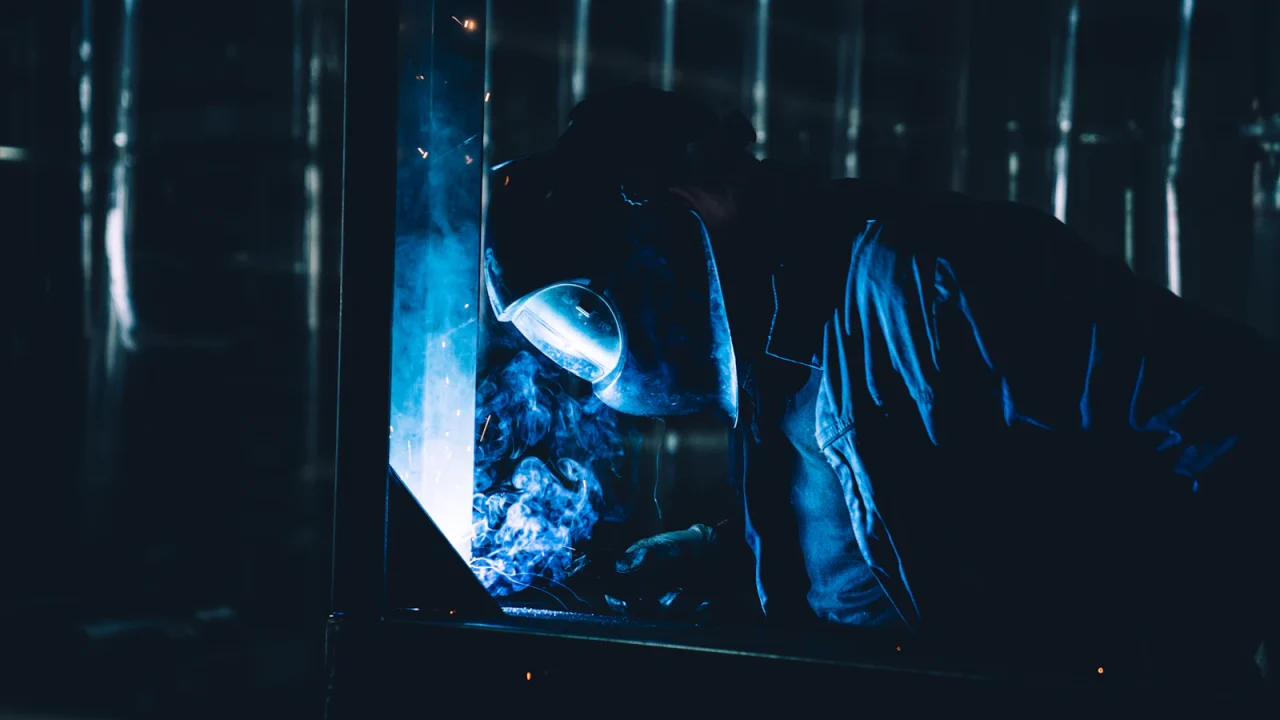
If you are buying a first welder for garage projects and repairs in mild steel, buy a wire-feed machine. This guide ranks welder types, not models: a gas-capable MIG welder comes first, a 120V flux-core welder is the lowest-cost start, and multi-process, stick and TIG machines follow for more specific needs.
On this page
The most important decision is whether to buy a machine that can run shielding gas. A gas-capable MIG welder also runs flux-core wire, but a flux-core-only machine cannot be converted to MIG later.
Who this suits (and who should look elsewhere)
This guide is for people with little or no welding time who want to build and fix things at home: brackets, carts, gates and shelving. Almost all of that is mild steel between sheet metal and 1/4 inch.
If you already know which process you want, go straight to the dedicated guide for MIG, flux-core, stick or multi-process machines. If the job is a trailer or vehicle frame, a pressure vessel, a fuel tank or anything structural, no beginner machine is the answer. That work needs a qualified welder and procedure.
Beginner welder types, ranked
The order reflects how quickly a beginner can make sound welds on common home projects, not which machine is most capable.
| Type | Best for | Process | Power | Key feature | Check price |
|---|---|---|---|---|---|
| 1. Gas-capable MIG welder | Most beginners working in a garage | MIG and flux-core | 120V or dual voltage | Clean welds on thin steel with little cleanup | See on Amazon (opens Amazon in a new tab) |
| 2. 120V flux-core welder | Lowest-cost start and outdoor repairs | Flux-core | 120V | No gas cylinder or regulator | See on Amazon (opens Amazon in a new tab) |
| 3. Dual-voltage multi-process welder | Learners who want to try every process | MIG, flux-core, stick, DC TIG | 120V/240V | One machine, several processes | See on Amazon (opens Amazon in a new tab) |
| 4. Inverter stick welder | Outdoor repairs on thicker or rusty steel | Stick | 120V, 240V or dual voltage | Simple, light and tolerant of wind | See on Amazon (opens Amazon in a new tab) |
| 5. AC/DC TIG welder | Buyers set on TIG, including aluminum | TIG and stick | 240V or dual voltage | Most control, slowest to learn | See on Amazon (opens Amazon in a new tab) |
MIG ranks first because the machine feeds the wire, leaving you to manage gun angle and travel speed. Flux-core works the same way without gas, so it costs less to start and copes with a breeze, with more spatter and slag to clean. MIG vs flux-core compares the two.
The specifications that matter on a first welder
- Amperage range against your material. For MIG on steel, allow roughly 1 amp per .001 inch of thickness. A typical 120V wire-feed machine tops out around 140 A, which covers thin sheet up to roughly 3/16 inch in a single pass. A 240V machine of 180 to 250 A handles roughly 5/16 to 1/2 inch.
- Input voltage and circuit. A 120V welder plugs into a household outlet, but many call for a dedicated 20 A circuit. A 240V machine needs a suitable circuit and receptacle installed by a qualified electrician. Dual-voltage machines run on both, with reduced output on 120V. See 120V vs 240V welders.
- Duty cycle. This is the percentage of a 10-minute period the machine can weld at a stated amperage. A rating of 30% at 90 A means 3 minutes of welding, then 7 minutes of cooling. Compare machines at the same amperage.
- Included accessories. Check for a gas regulator and hose, spare contact tips and drive rolls for your wire sizes.
- Consumable availability. Contact tips, nozzles and liners wear out, so pick a machine with easy-to-find parts.
These are typical ranges for each type. Confirm the exact figures on the product listing and in the manual.
Three types worth shortlisting
Best first welder for most beginners
Dual-voltage MIG welder
Why consider it
- Runs solid wire with gas for clean welds, and flux-core wire for outdoor jobs
- Starts on a household circuit and delivers more output on 240V
- Wire-feed is the quickest process for a beginner to pick up
Best for: Garage projects in thin to moderate mild steel, with room to move up to 240V
Check price on Amazon (opens Amazon in a new tab)
Type-level recommendation. Compare current models, specifications and prices on Amazon. We may earn a commission.
Lowest-cost start
120V flux-core welder
Why consider it
- Self-shielded wire needs no gas cylinder or regulator
- Light enough to carry to a gate or fence repair
- More spatter and slag than MIG, and flux-core-only models cannot add gas later
Best for: Occasional repairs and outdoor work where a gas cylinder is not wanted
Check price on Amazon (opens Amazon in a new tab)
Type-level recommendation. Compare current models, specifications and prices on Amazon. We may earn a commission.
For outdoor repairs on thicker steel
Inverter stick welder
Why consider it
- The simplest machine type, with no wire feeder or gas
- Often well under 20 lb and frequently dual-voltage
- Harder to learn than MIG, especially striking and holding the arc
Best for: Outdoor repairs on steel too thick, rusty or wind-exposed for wire-feed
Check price on Amazon (opens Amazon in a new tab)
Type-level recommendation. Compare current models, specifications and prices on Amazon. We may earn a commission.
Other kit and running costs to budget for
The welder is only part of the first purchase. You need an auto-darkening welding helmet, gloves, a flame-resistant jacket, safety glasses, clamps and an angle grinder.
Running costs are wire, contact tips and nozzles, grinding discs and practice steel. MIG adds a cylinder of 75/25 argon/CO2, which you buy or lease and then pay to refill. Flux-core skips the gas, though the wire costs more than solid wire.
Common buying mistakes
- Buying flux-core-only when you want MIG later. Look for a gas inlet if clean welds on thin steel are the goal.
- Choosing by maximum amperage alone. The low end matters for sheet metal, and duty cycle matters for longer welds.
- Starting with TIG because the welds look good. It takes both hands, often a foot, and a lot of practice.
Once the machine arrives, common beginner welding mistakes covers the errors that spoil first welds.
Frequently asked questions
What is the easiest type of welder to learn on?
Should a beginner buy a flux-core or a MIG welder?
Do I need a 240V outlet for my first welder?
Can a beginner start with TIG?
Sources and further reading
Related gear on Amazon
Shortcuts to current Amazon listings for the items mentioned in this guide. These are affiliate links.
Tools that help with this decision
- Welder Match Quiz — Ten quick questions that match you to a type of welder.
- Amperage Calculator — Estimate the amperage range for your material and process.
- Power Compatibility Checker — Verify voltage, breaker, and outlet before buying.
- Setup Generator — Build a safety-first setup checklist.