Welding PPE Checklist: What to Wear Before You Strike an Arc
Before you weld, put on a helmet, safety glasses, a flame-resistant jacket, leather gloves, cuffless pants over leather boots and hearing protection.
WelderGuru is reader-supported. As an Amazon Associate we earn from qualifying purchases made through links on this page, at no extra cost to you. Learn more.
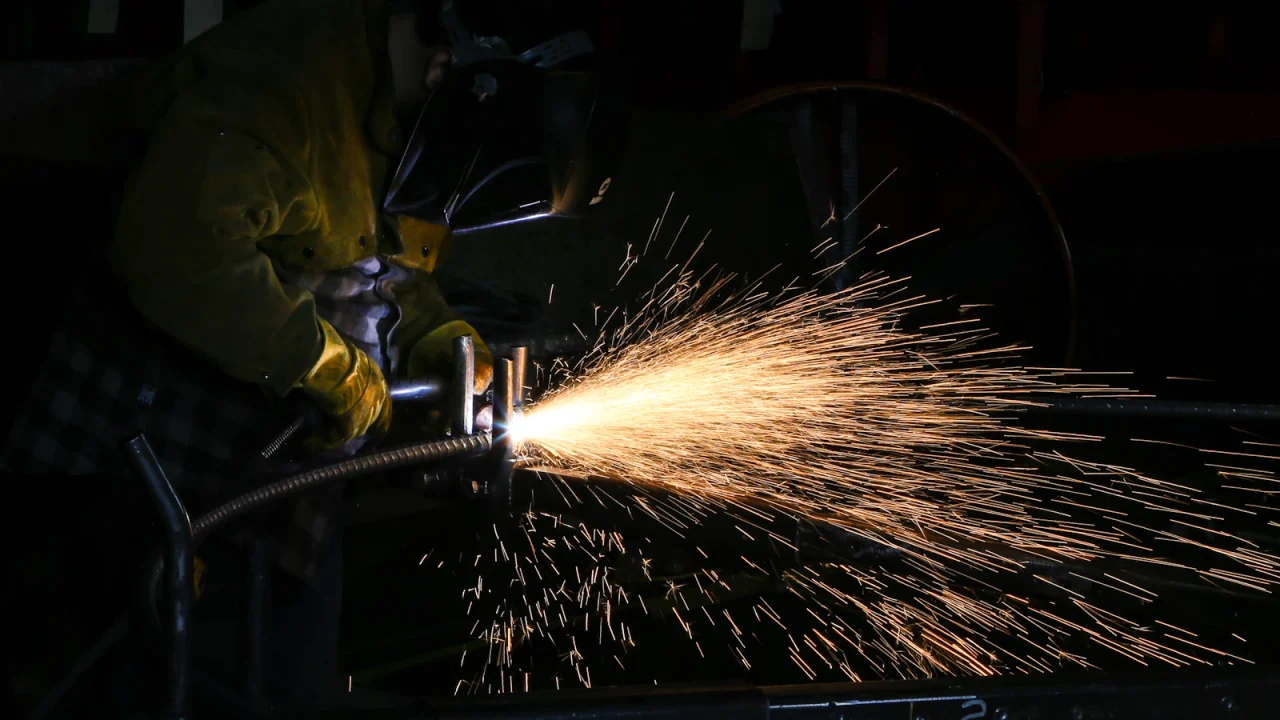
Before you strike an arc you need seven things on: a welding helmet with the right filter shade, safety glasses under it, a flame-resistant cap, a flame-resistant cotton or leather jacket, leather gloves matched to your process, cuffless pants worn over leather boots, and hearing protection for grinding. Add a respirator whenever ventilation alone can’t keep fume out of your breathing zone.
On this page
The logic behind the list is coverage. No bare skin for ultraviolet light to burn, no synthetic fabric to melt onto you, and no cuffs, pockets, or gaps for sparks to land in. Everything below follows from those three ideas.
The head-to-toe checklist
- Helmet: auto-darkening or fixed shade, with a filter matched to your process and amperage.
- Safety glasses: marked Z87.1, with side shields, worn under the helmet.
- Head and ears: a flame-resistant welding cap, plus earplugs or earmuffs for grinding and overhead work.
- Jacket: flame-resistant cotton or leather, collar closed, sleeves to the wrist.
- Gloves: dry leather welding gloves with no holes, chosen for the process.
- Pants: heavy cotton or flame-resistant fabric with no cuffs or tears, worn over the boot tops.
- Boots: leather and high-topped, with the laces covered by the pant leg.
- Respirator: whenever the material or the space means ventilation is not enough.
Check each item before every session, and replace anything damaged instead of patching it. The welding safety gear guide goes through each item type in more detail.
Eyes, face, and head
The helmet protects your face, neck, and eyes from arc radiation and spatter. Pick the filter shade from a chart, not by guesswork. The helmet shade guide lists OSHA minimums and comfort shades by process and amperage, and the welding helmets guide explains which features matter.
Safety glasses stay on under the helmet. AWS guidance is to always wear glasses with side protection under a helmet or face shield, because slag chips, grinding fragments, and wire wheel bristles can ricochet under the hood.
A flame-resistant cap keeps sparks off your scalp and matters most for overhead work. Hearing protection is on the list for two reasons: grinding is loud, and plugs or muffs keep sparks and hot metal out of your ears.
Clothing: what to wear and what to avoid
Heavier is safer. AWS recommends leather or non-melting flame-resistant clothing because heavier materials are harder to ignite. In practice, a flame-resistant cotton jacket suits most MIG and TIG work. Leather, or a jacket with leather sleeves, suits stick, flux-core, and overhead welding, where spatter is heavier.
Body protection
Flame-resistant cotton welding jacket
Why consider it
- Treated cotton resists ignition from sparks and does not melt the way synthetic fabric does
- Lighter and cooler than leather, so it is more likely to stay on in a warm garage
- Flame-resistant treatment can wear out with washing, so follow the maker's care instructions
Best for: Home welders doing MIG, TIG or light stick work who want full arm and neck coverage without the weight of leather
See current options on Amazon (opens Amazon in a new tab)
Type-level recommendation. Compare current models, specifications and prices on Amazon. We may earn a commission.
Keep these out of the welding area:
- Synthetics: polyester, nylon, fleece, and stretch blends melt and stick to skin. Check the label on shirts, base layers, and stretch jeans.
- Cuffs and open pockets: they catch sparks. Unroll cuffs and button or cover pockets.
- Frayed or torn fabric: loose threads ignite easily, and holes let UV through to the skin underneath.
- Oil, grease, and solvent stains: contaminated fabric can catch fire even when the fabric itself is flame resistant.
- Lighters and matches: take them out of your pockets before you start.
- Short sleeves and shorts: arc UV burns bare skin quickly, even on a short job.
Pants should overlap the tops of your boots and never be tucked in, so sparks slide off instead of dropping inside. Boots should be leather and high-topped. Keep clothing dry as well, since wet fabric raises the risk of electric shock.
Gloves by process
One pair of gloves does not suit every process. Heavy gloves protect against heat and spatter but cost you finger control, and TIG needs finger control more than it needs insulation.
| Process | Glove type | Why |
|---|---|---|
| Stick | Heavy leather gauntlets, usually lined | Highest heat and spatter; long cuffs protect the wrist and forearm |
| MIG and flux-core | Medium-weight leather gauntlets | Steady spatter and radiant heat, with enough feel for the trigger |
| TIG | Thin goatskin or deerskin, unlined or lightly lined | Dexterity to feed filler rod; little spatter, but less heat protection |
| Grinding and handling | Separate leather work gloves | Saves wear on welding gloves and keeps them free of holes |
Whatever the process, gloves must be dry and free of holes. Leather resists electricity well only when dry, and a hole puts bare skin against live or hot metal. The welding gloves guide covers types and sizing, and TIG welding basics explains why feel matters so much for that process.
Respiratory protection basics
Ventilation comes first: fresh air moving across the work, and your head kept out of the plume. A respirator is for situations where that is not enough, such as welding galvanized or stainless steel, working in a closed garage in winter, or running high-fume processes like flux-core and stick indoors.
Welding fume is made of very fine solid particles, so it takes a particulate filter to capture it. Look for the NIOSH approval mark and rating on the filter or mask. Ratings run from 95 to 100, and the 100 class filters at least 99.97 percent of particles. Three things decide whether a respirator protects you:
- Type: a common choice is a reusable half-mask with low-profile particulate filters made to fit under a helmet. Powered air-purifying helmets suit people who weld often.
- Fit: a tight-fitting mask only works if it seals to your face, and facial hair breaks the seal. Follow the respirator maker’s fitting and seal-check instructions.
- Limits: particulate filters don’t remove gases and don’t supply oxygen. They give no protection in an enclosed space where shielding gas has displaced the air.
In workplaces, respirator use comes with formal fit testing and a medical evaluation. The reasoning applies at home too: if you have a heart or lung condition, ask a doctor before relying on a tight-fitting respirator. The welding safety basics guide explains which materials produce the most hazardous fume.
Frequently asked questions
Can I wear jeans for welding?
Do I need safety glasses under an auto-darkening helmet?
Can I use the same gloves for MIG and TIG?
Is a dust mask enough for welding fume?
Sources and further reading
- American Welding Society: free Safety and Health Fact Sheets (No. 33, Personal Protective Equipment; No. 37, Selecting Gloves; No. 38, Respiratory Protection Basics) and ANSI Z49.1
- OSHA standard 29 CFR 1910.252, Welding, cutting and brazing: general requirements (text hosted by Cornell Law School)
- NIOSH: Welding Fumes and Manganese
Keep reading
Related guides
Safety
Welding Safety Basics: The Real Hazards and How to Control Them
Welding has six real hazards (arc rays, fire, fumes, electric shock, gas cylinders and grinding), and each one has specific controls that…
Guide
Welding Helmet Shade Guide: Which Lens Shade Do You Need?
Most home MIG, stick and TIG welding needs a shade 10 to 12 lens; this chart gives OSHA minimum and comfort shades…
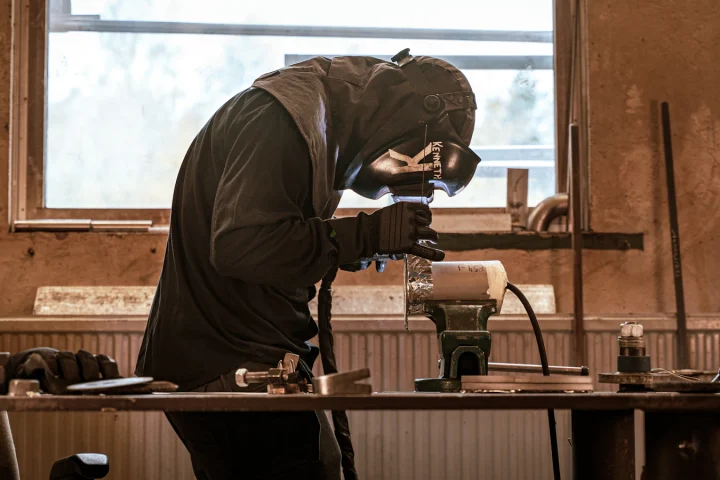
Guide
How to Set Up a Safe Home Welding Area
A safe home welding area needs bare concrete, combustibles moved 35 feet away or shielded, ventilation, a suitable circuit and a fire…