What Welder Should a Beginner Buy?
A beginner should usually buy a wire-feed welder: 120V flux-core for a low-cost start, or a gas-capable MIG machine for cleaner welds on thin steel.
WelderGuru is reader-supported. As an Amazon Associate we earn from qualifying purchases made through links on this page, at no extra cost to you. Learn more.
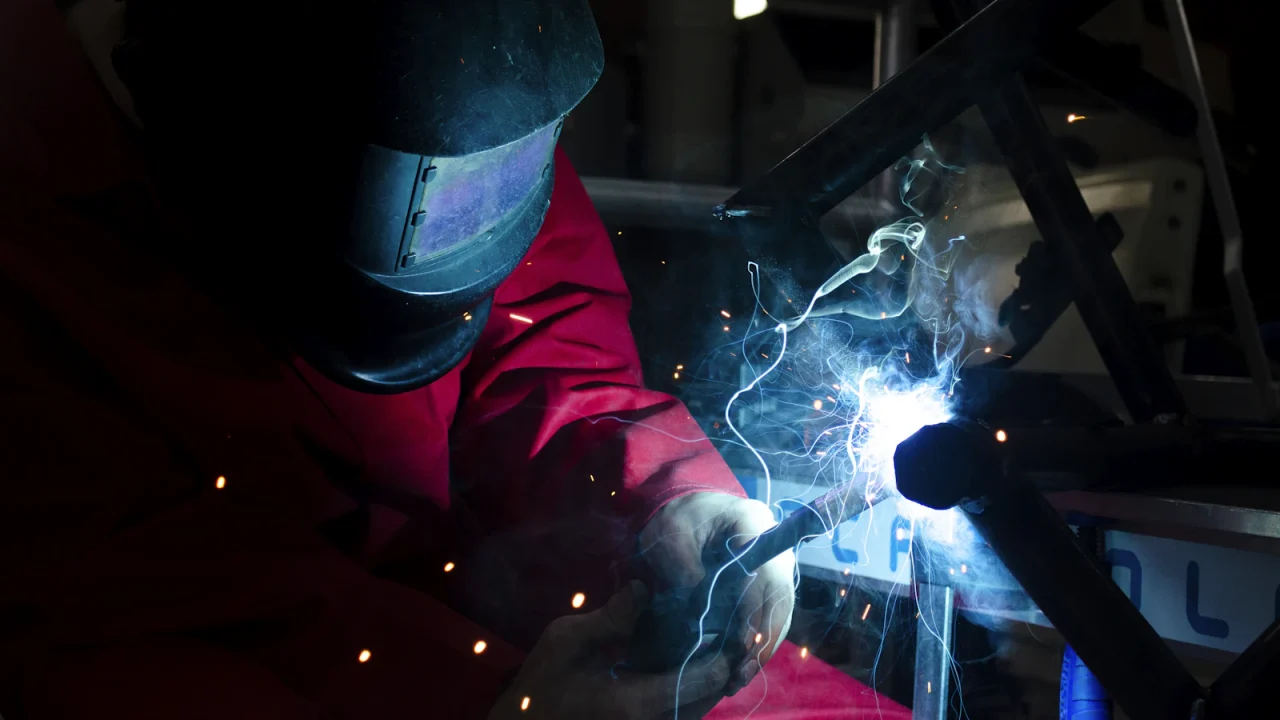
A beginner should usually buy a wire-feed welder. A 120V flux-core machine is the low-cost way in for occasional repairs and outdoor work, and a gas-capable MIG machine is the better choice if you want cleaner welds on thinner steel in a garage. If you have a 240V outlet, or can have one installed, a dual-voltage MIG or multi-process machine gives you the most room to grow.
On this page
Which of those fits depends on four things you can check today: the outlet you have, the metal and thickness you plan to weld, whether you will work indoors or outdoors, and how much you want to spend.
Start with the power you have
Input power sets the ceiling on what a welder can do. A 120V machine plugs into a household outlet and typically handles sheet metal up to roughly 3/16-inch steel in a single pass, depending on the model and process. A 240V machine delivers more output, welds thicker material and runs longer before it needs to cool.
At higher settings a 120V welder can draw more current than a shared 15A circuit supplies, so the breaker trips. Manufacturers commonly specify a dedicated 20A circuit, and the manual lists the exact requirement. Long or light-gauge extension cords reduce output. The power compatibility checker compares a machine’s input needs with your circuit, and the 120V vs 240V comparison goes deeper.
If you need a new circuit or a 240V outlet, hire a qualified electrician. Dual-voltage machines accept either input, usually by changing the plug, so you can start on 120V and move up later.
Match the machine to your metal and thickness
A rough rule for MIG on steel is about 1 amp of output for every .001 inch of thickness, so 1/8-inch (.125) steel calls for around 125 amps. Use that to read spec sheets: the machine should reach the amperage for your thickest regular job with some margin. Treat the rule as an estimate and confirm against the manufacturer’s capacity chart.
| Planned work | Machine type that fits | Input power |
|---|---|---|
| Thin sheet metal indoors | Gas-capable MIG welder with .023 or .025-inch wire | 120V is usually enough |
| Garage projects in steel up to about 3/16 inch | MIG welder, or flux-core to skip the gas | 120V on a dedicated 20A circuit |
| Steel 1/4 inch and thicker, or long welds | Dual-voltage or 240V MIG, multi-process or stick welder | 240V |
| Outdoor repairs on gates, fences and equipment | Flux-core or stick welder | 120V or 240V, by thickness |
| Aluminum | MIG welder with a spool gun and argon, or an AC TIG welder | 240V preferred |
Trailer frames, vehicle chassis, pressure tanks and anything structural are not beginner projects whatever the machine. That work needs qualified procedures and inspection.
Indoor or outdoor work
MIG depends on shielding gas, and moving air strips that gas away from the puddle. In a closed garage that is not a problem. In a driveway or field it is, and the answer is a process that makes its own shielding: self-shielded flux-core wire or stick electrodes. The trade is more smoke, spatter and slag.
If you will work in both settings, a gas-capable MIG machine covers them, because it can also run flux-core wire once you change the wire, drive roll and polarity. The MIG vs flux-core comparison covers the differences, and MIG vs TIG vs stick compares the processes more broadly.
Budget tiers, in plain terms
- Entry level: 120V flux-core-only machines. Lowest outlay and no gas to buy, but limited on thin sheet and thick plate.
- Mid-range: 120V or dual-voltage MIG machines with a gas connection. They cost more and add a cylinder and regulator, but they weld thin steel cleanly and still run flux-core.
- Upper tier: dual-voltage multi-process machines. The highest outlay of the three, in exchange for MIG, flux-core, stick and usually DC TIG from one unit.
Whichever tier you choose, the machine is not the whole bill. You also need a welding helmet, gloves, a jacket, clamps, an angle grinder, wire or rods and, for MIG, a filled gas cylinder. The welding safety gear guide lists the protective items.
Three machine types worth shortlisting
Lowest-cost start
120V flux-core welder
Why consider it
- Runs self-shielded wire, so there is no gas cylinder or regulator
- Plugs into a 120V outlet and is light enough to carry to the job
- Flux-core-only models cannot be converted to gas-shielded MIG later
Best for: Occasional repairs and outdoor jobs on mild steel, with no gas cylinder to buy
See current options on Amazon (opens Amazon in a new tab)
Type-level recommendation. Compare current models, specifications and prices on Amazon. We may earn a commission.
Best fit for most beginners
Dual-voltage MIG welder
Why consider it
- Runs solid wire with gas for clean welds and flux-core wire for outdoor work
- Works on 120V now and delivers more output when a 240V outlet is available
- Many models accept a spool gun for aluminum
Best for: Garage fabrication on thin to moderate steel, with a path to thicker work on 240V
See current options on Amazon (opens Amazon in a new tab)
Type-level recommendation. Compare current models, specifications and prices on Amazon. We may earn a commission.
Most room to grow
Multi-process welder
Why consider it
- One power source covers MIG, flux-core, stick and usually DC TIG
- TIG torches, foot pedals and spool guns are often sold separately
- DC-only TIG output cannot weld aluminum, so check for AC if that matters
Best for: Learners who want to try MIG, stick and TIG before committing to one process
See current options on Amazon (opens Amazon in a new tab)
Type-level recommendation. Compare current models, specifications and prices on Amazon. We may earn a commission.
What to check on the spec sheet
- Rated output and duty cycle. Duty cycle is the share of a 10-minute period a machine can weld at a given amperage before it must cool. Compare machines at the same amperage. The duty cycle calculator turns a rating into minutes.
- Input requirements. Voltage, breaker size and plug type should match your circuit.
- Amperage range. The low end matters for sheet metal as much as the high end matters for plate.
- Gas capability. Look for a gas inlet, and check whether a regulator and hose are included.
- Wire sizes and spool capacity. Confirm it feeds the diameters you plan to use.
- Thermal overload protection, warranty and parts supply. Contact tips, nozzles and liners are consumables you will replace.
The beginner welders buying guide narrows the field further.
Frequently asked questions
Can I run a welder on a regular household outlet?
Is a flux-core welder good enough to learn on?
Should a beginner buy a multi-process welder?
Do I need 240V to weld 1/4-inch steel?
Sources and further reading
Keep reading
Related guides
Comparison
MIG vs TIG vs Stick: Which Welding Process Should You Learn First?
MIG is the easiest welding process to learn first, stick suits outdoor work on rusty steel, and TIG offers the most control…
Guide
9 Common Beginner Welding Mistakes (and How to Fix Them)
Nine common beginner welding mistakes, from dirty metal and poor clamp contact to wrong settings and travel speed, with a practical fix…
Guide
What Is Welding? How Metal Is Joined, Explained Simply
Welding joins metal by melting the edges of two pieces together, usually with added filler, so they cool into a single solid…