Buying guide
120V Welder Buying Guide: What a Household Outlet Can Really Do
What a 120V welder can and cannot do: realistic thickness limits, circuit and extension cord needs, duty cycle and the types to compare.
WelderGuru is reader-supported. As an Amazon Associate we earn from qualifying purchases made through links on this page, at no extra cost to you. Learn more.
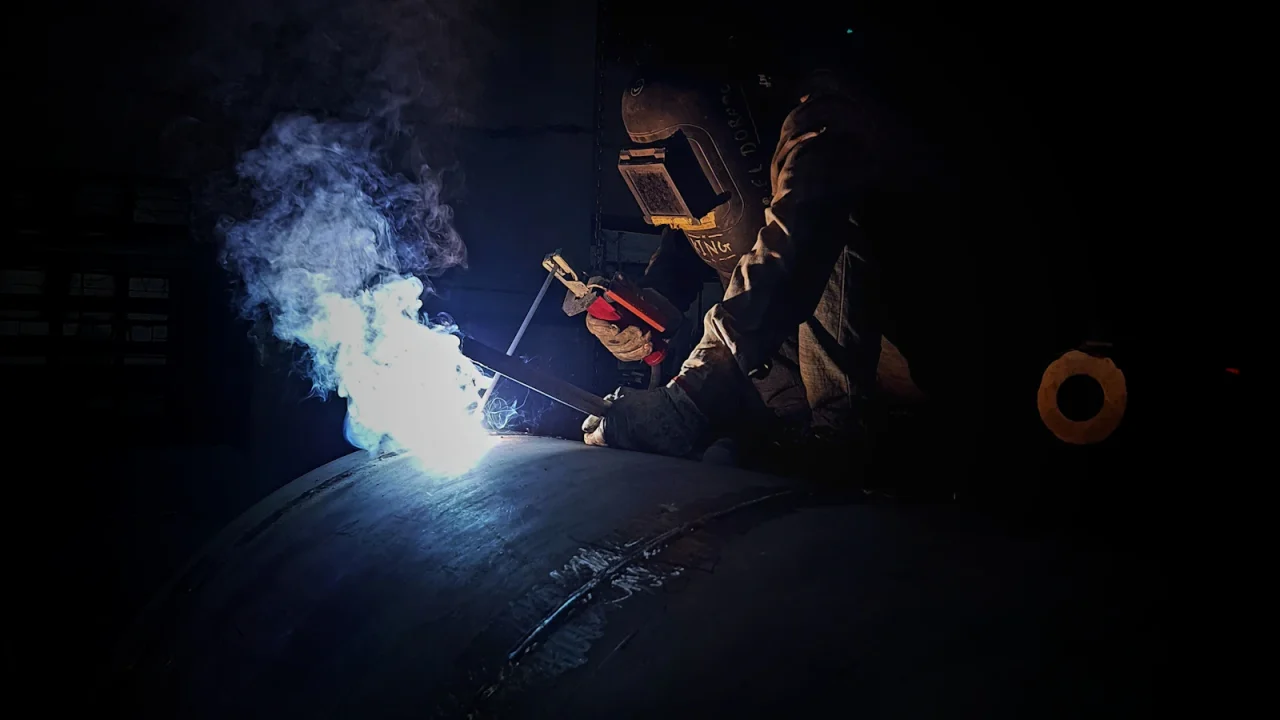
A 120V welder suits you if a standard household outlet is the only power you have and your work is mild steel from sheet metal up to about 3/16 inch: sheet metal panels, tube furniture, brackets, carts and light repairs. It is the wrong choice if you regularly weld 1/4-inch plate or thicker.
On this page
The decision that matters most is an honest answer about the thickest steel you will weld often. A household circuit limits a wire-feed machine to around 140 A, and no feature on the spec sheet changes that.
Who this suits (and who should look elsewhere)
120V machines fit renters, small garages and anyone who needs to weld wherever there is an ordinary outlet. They are also where most people start, because they cost less and need little or no electrical work. On thin material they give nothing away, since sheet metal needs low amperage.
Look at 240V welders if your projects include 1/4-inch and thicker steel, long continuous welds, or aluminum with a spool gun. The 120V vs 240V comparison sets out what each supply can realistically do.
120V welder types compared
| Type | Best for | Process | Power | Key feature | Check price |
|---|---|---|---|---|---|
| 120V flux-core welder | Lowest-cost start and outdoor repairs | Flux-core | 120V | No gas cylinder needed | See on Amazon (opens Amazon in a new tab) |
| 120V gas-capable MIG welder | Thin steel and sheet metal indoors | MIG and flux-core | 120V | Gas inlet for clean solid-wire welds | See on Amazon (opens Amazon in a new tab) |
| 120V inverter stick welder | Outdoor repairs on less-than-clean steel | Stick | 120V | Often well under 20 lb | See on Amazon (opens Amazon in a new tab) |
| Dual-voltage MIG welder | Starting on 120V with a path to 240V | MIG and flux-core | 120V/240V | Reduced output on 120V, full on 240V | See on Amazon (opens Amazon in a new tab) |
The flux-core welders guide covers the first type in more depth.
The specifications that matter on 120V
Amperage range and material thickness
For MIG on steel, the rough rule is about 1 amp per .001 inch of thickness, so 1/8-inch (.125) steel wants around 125 A. With a ceiling near 140 A, a 120V machine is comfortable to about 1/8 inch and reaches roughly 3/16 inch in a single pass. Beyond that you rely on flux-core wire, beveled joints and several passes. Check the low end too, because sheet metal needs a machine that turns down far enough. The amperage calculator estimates a starting range.
Duty cycle
Duty cycle is the percentage of a 10-minute period a machine can weld at a stated amperage. A rating of 30% at 90 A means 3 minutes of welding and 7 minutes of cooling. The figure drops as amperage rises, so a small machine near its maximum needs long rests. Compare machines at the same amperage. The duty cycle calculator turns a rating into weld and rest time.
Circuit and extension cords
The nameplate and manual give the input current. Many 120V welders call for a dedicated 20 A circuit, meaning nothing else runs on it. On a shared 15 A circuit the breaker is likely to trip once you turn the machine up. If you lack a suitable circuit, have a qualified electrician install one. Avoid extension cords where you can: a long or thin cord drops voltage and weakens the arc. If you must use one, follow the cord guidance in the manual.
Accessories and consumables
On a wire-feed machine, check which wire diameters and spool sizes it accepts, and whether a gas regulator, hose and drive rolls for both solid and flux-core wire are included. Contact tips, nozzles and liners are wear parts, so favor widely available patterns. These are typical ranges for the type. Confirm exact figures on the product listing and in the manual.
Three types worth shortlisting
Best all-round 120V choice
120V gas-capable MIG welder
Why consider it
- Runs solid wire with 75/25 argon/CO2 for clean welds on thin steel
- Switches to self-shielded flux-core wire for outdoor work or thicker sections
- Output of up to around 140 A suits a household circuit
Best for: Garage work on sheet metal and mild steel up to roughly 3/16 inch
Check price on Amazon (opens Amazon in a new tab)
Type-level recommendation. Compare current models, specifications and prices on Amazon. We may earn a commission.
Lowest cost
120V flux-core welder
Why consider it
- No shielding gas, regulator or cylinder required
- Self-shielded wire copes with wind better than gas-shielded MIG
- More spatter, fume and slag, and harder to use on thin sheet
Best for: Occasional repairs and outdoor jobs with no gas cylinder to buy or carry
Check price on Amazon (opens Amazon in a new tab)
Type-level recommendation. Compare current models, specifications and prices on Amazon. We may earn a commission.
If 240V may come later
Dual-voltage MIG welder
Why consider it
- Runs on 120V now at reduced output
- Reaches its full amperage and thickness capacity on 240V
- Costs more than a 120V-only machine of similar size
Best for: Buyers on household power today who expect to add a 240V circuit
Check price on Amazon (opens Amazon in a new tab)
Type-level recommendation. Compare current models, specifications and prices on Amazon. We may earn a commission.
Other kit and running costs to budget for
Plan for wire, contact tips and nozzles, and for MIG a gas cylinder that you buy or lease and then refill. If your garage lacks a dedicated 20 A circuit, an electrician’s visit may be the largest additional cost. Protective equipment is the other fixed item, and the welding safety gear guide lists it.
Common buying mistakes
- Expecting single-pass welds on 1/4-inch plate. Some machines list it as a maximum, but it sits at the edge of their output.
- Running the welder on a shared circuit. Lights, a compressor or a freezer on the same breaker leave too little for the welder.
- Buying flux-core-only, then wanting MIG. A machine without a gas inlet cannot be converted. See MIG vs flux-core.
- Reading maximum amperage and ignoring duty cycle. Output you can hold for only a minute or two is of limited use.
Frequently asked questions
How thick can a 120V welder weld?
Will a 120V welder trip my breaker?
Can I use an extension cord with a 120V welder?
Should I buy a 120V or a dual-voltage welder?
Sources and further reading
Related gear on Amazon
Shortcuts to current Amazon listings for the items mentioned in this guide. These are affiliate links.
Tools that help with this decision
- Welder Match Quiz — Ten quick questions that match you to a type of welder.
- Amperage Calculator — Estimate the amperage range for your material and process.
- Power Compatibility Checker — Verify voltage, breaker, and outlet before buying.
- Setup Generator — Build a safety-first setup checklist.